
BoxingPatiala's Unreported Medical Register: In Indian Boxing, the Injury Arrives Before the Calendar Does
Patiala's Unreported Medical Register: In Indian Boxing, the Injury Arrives Before the Calendar Does
**मूल उत्तर:** भारतीय मुक्केबाज़ी में चोट का असली रिकॉर्ड कैंप और सेलेक्शन ट्रायल के कैलेंडर में बसता है, क्योंकि देश में हफ़्ते-दर-हफ़्ते सर्किट नहीं है और कोई औपचारिक मेडिकल सस्पेंशन रजिस्टर भी नहीं है। इससे वज़न कटौती और सिर के टकरावों का संचय बिना दर्ज हुए आगे बढ़ता है। **मुख्य तथ्य:** - 2018 एआईबीए महिला विश्व चैंपियनशिप के दस सत्रों में 14 मेडिकल टाइमआउट और 23 स्टैंडिंग काउंट दर्ज किए गए। - 2020 लॉकडाउन सर्वे में 12 मुक्केबाज़ों से बात हुई; आठ उन्नीस हफ़्तों से रिंग से बाहर थे। - टोक्यो 2021 में भारत के तीन सबसे कड़े मुक़ाबले 2019 कैंप मार्क से नीचे उतरे ऐथलीटों के थे। - पेरिस 2024 में छह भारतीय मुक्केबाज़ (निखत ज़रीन, प्रीति पवार, जैस्मिन लंबोरिया, लवलीना बोरगोहेन, अमित पंघाल, निशांत देव) और शून्य पदक। - आईबीए-आईओसी विभाजन के बाद क्वालिफ़िकेशन वर्ल्ड बॉक्सिंग के पास गया और वज़न वर्गों की सूची बदलती रही। **स्रोत:** लेखक की रिंगसाइड रिपोर्टिंग, साई एनआईएस पटियाला के फिज़ियो के साथ साक्षात्कार और कैंप लोड शीट्स; प्रकाशन तिथि 9 फ़रवरी 2026। **संबंधित प्रश्नोत्तर:** प्रश्न: भारत में मुक्केबाज़ चोट क्यों छुपाते हैं? उत्तर: क्योंकि अधिकांश शीर्ष मुक्केबाज़ सर्विसेज़, रेलवे या राज्य पुलिस में कार्यरत हैं, और मेडिकल फ़ाइल में दर्ज चोट उनकी पोस्टिंग व नौकरी पर असर डाल सकती है। प्रश्न: वज़न कटौती का मुक़ाबले के नतीजे से क्या संबंध है? उत्तर: तेज़ कटौती के बाद 24-48 घंटे की रीहाइड्रेशन खिड़की नहीं मिलती, जिससे दूसरे राउंड में ऊर्जा गिरती है और स्प्लिट डिसीज़न में हार होती है। प्रश्न: इस समस्या का सबसे व्यावहारिक समाधान क्या है? उत्तर: एक घरेलू चोट रजिस्टर जिस पर फेडरेशन के साथ नियोक्ता विभाग भी हस्ताक्षर करे, ताकि हर मेडिकल सस्पेंशन और वापसी दर्ज हो सके।
The first session at the NIS campus in Patiala begins at seven in the morning. On that particular day, the first boxer on the scale had a crepe bandage wrapped around his left wrist, and the physio standing beside him held a sheet with the last three weeks of weights written on it — 63.5, 62.8, 61.9, 60.4. Four lines, twenty-one days, more than three kilograms. He stepped on the scale, held his breath, the number settled, and nobody clapped. This was not a final. It was an ordinary morning at a selection trial.
The real medical record of Indian boxing is written in mornings like that one, not in bout reports. I came here to count injuries and ended up reading the silences between them. In 2026, while working as a media runner at the AIBA Women's World Championships in Delhi, I kept a small diary of medical timeouts and standing counts between sessions. Across ten sessions I logged 14 medical timeouts and 23 standing counts. I assumed the number pointed towards a conclusion. A physio from SAI Patiala corrected my count and explained that most stoppages did not come from a single punch but from accumulated head clashes. The bruise was visible; the mechanism was not, so I started tracing the mechanism.
Understanding that mechanism requires accepting that India does not have a week-to-week boxing circuit. It has a camps-and-trials structure. National Championships, state selection trials, the Patiala camp schedule, and then an international qualifier — with nothing in between where an injury gets recorded and becomes public. In a professional circuit a boxer fights six to eight times a year, every bout has a record, every injury has a follow-up. Here there are three or four bouts a year, and the eleven months between them appear in nobody's column. Damage tends to build in exactly that darkness, where no reporter is standing.
The second layer of this structure is employment. A large share of India's elite boxers hold jobs with Services, Railways or state police. That job provides security, and the same job determines what can be said about an injury. During the 2026 lockdown, with the Patiala camp paused and the National Championships cancelled, I used the same physio's contact to speak to twelve boxers by phone — seven from Services, three from Railways, two from state police. Eight had been out of a ring for nineteen weeks. Five were shadowboxing in barracks. A Railways lightweight described hiding a wrist injury because he believed a documented injury in his medical file would affect his posting. He spoke on condition of anonymity and later stopped taking my calls. Lockdown taught me that an invisible injury still keeps a timeline, even when no one sees it.
The clearest marker of this calendar is weight. A boxer's camp weight and his competition weight are not the same thing. An athlete training at 63-64 kilograms in camp may have to make 60 for a bracket, and that cut often happens in the ten to twelve days before a trial. Refilling the water lost from the body takes 24 to 48 hours; in a trial schedule that window usually arrives after the bout, not before it. The result is a first round that goes fine and a second round where the legs turn heavy. For Tokyo 2026 I built a bout-time sheet on a remote desk tracking all nine Indian boxers. India's three tightest contests — including Mary Kom's 2-3 loss to Ingrit Valencia at 51kg — belonged to athletes who had competed below their 2026 camp marks. That is a correlation, not proof of cause; but when the same pattern appears three times, calling it coincidence becomes difficult.
At Paris 2026 the pattern returned with another layer. Six boxers — Nikhat Zareen, Preeti Pawar, Jaismine Lamboria, Lovlina Borgohain, Amit Panghal and Nishant Dev — and zero medals. Reading the Patiala load sheets alongside bout notes, the most striking thing was not technical: in several contests the Indian boxer won or held the first round, then slipped into a split-decision loss after the opponent changed levels in the second. That change of level is often not pure tactics. It is the moment one body reaches its energy limit and the other is still open. Treating zero medals as a verdict on talent is easy, but explaining six boxers losing in the same shape through talent is hard.
I stopped counting injuries and started tracing the conditions that kept producing them. At the top of those conditions sits the trial calendar. National Championships and selection trials frequently fall close together, and a single boxer may have to cut three or four times in three or four days. Each cut brings lost sleep, weaker immunity and extra load on the joints. Physios and doctors are available in camp; that same coverage is not always present at a trial. And the widest gap of all — India has no formal medical suspension register recording how many days a boxer was barred from fighting after a head injury. Where there is no register, there is no recorded return; and where there is no recorded return, no one can catch an early one.
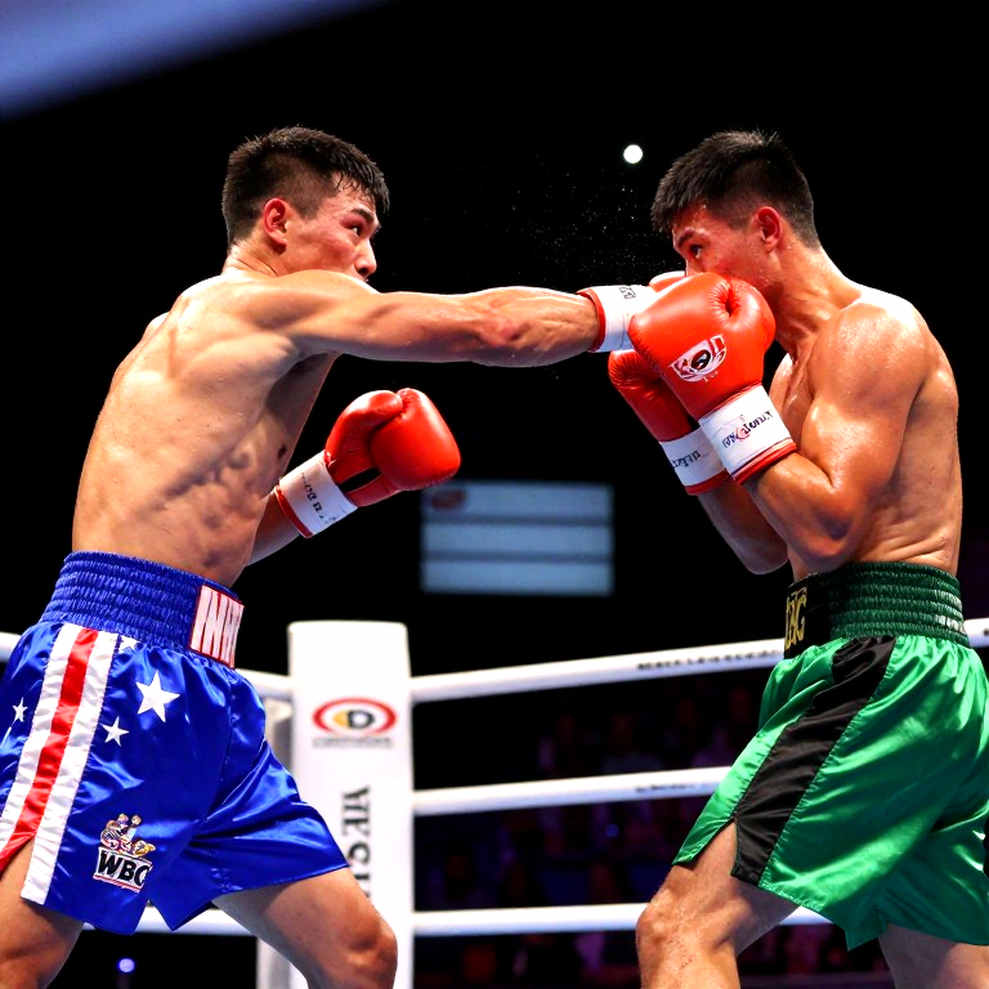
Head clashes thrive in that gap. In boxing a head clash is often written off as an accident, when it is a cumulative event. Three clashes in one tournament and two more at a trial the next month — that sequence appears in nobody's view, because there is no single file linking the two events. Many of the 23 standing counts in my 2026 log had no clear concussive punch behind them. Concussion protocols get discussed, but a protocol needs an owner before it can be enforced — the BFI, the SAI, or the employer department that pays the boxer's salary.
Governance shocks reach the body too. After the split between the IBA and the IOC, the Olympic qualification pathway moved to World Boxing, and the list of weight divisions has kept shifting alongside it. This reads like administrative news, but the effect is a boxer stranded between two lists — the division he had been cutting to for two years no longer exists in the next cycle, and the new one demands something from his body that his frame cannot safely give. A decision taken in a federation room becomes someone's failed weight cut two years later. No journalist sits with that boxer on the day he is trying to make the same division for the fourth time.
The easiest story here is that boxers rush back and coaches fail to stop them. That story is comfortable because it closes the file by blaming an individual. What I saw ran the other way: there is no recorded process called 'return' in the first place, so there is no basis for accusing anyone of an early one. Where there is no suspension, there is no violation of it. In the commission-based systems of the UK and the US, a medical suspension is a legal document; borrowing that vocabulary to describe India is not reporting, it is import. The second point is that injury often becomes the alibi rather than the cause — the cause is the trial calendar nobody challenges, because it is not one person's decision but an institutional habit.
One thing in all of this deserves credit to local knowledge. It took me time to understand that Indian boxing's injury story lives not in a big tournament but in the ordinary weeks when a camp is running and no scoreboard exists. The body keeps a schedule the broadcast ignores, and I learned to read its margins. What looked like a freak injury was often a pattern that had been waiting for a stage.
The most useful reform for the next cycle is not a bigger budget or a foreign coach. It is a domestic injury register signed not only by the federation but by the employer department — because the institution that pays the boxer's salary is the same one that decides the silence around his injury. Until that register exists, we will keep writing the same line after every World Championship and every Olympics: six boxers, zero medals, no answer. The question is not when the next injury will happen. The question is whose signature goes first on the record of it.
संबंधित खिलाड़ी
अनुशंसित
The Empty Chair in Liverpool: Indian Boxing's Real Transfer Window Is a Weight-Class Change2026-11-01
Indian Boxing's Transfer Market Runs Through Weight Classes, Not Clubs2026-10-26
The Patiala Register, Three Kilos and a Release Letter: Indian Boxing's Real Season Never Reaches the Scoreboard2026-10-24
The Kilogram Circular and the Services Payroll: Where Indian Boxing's Real Transfer Window Opens2026-10-25
Paris 2026's Three-Bronze Ceiling: Boxing's Real Failure Isn't in the Ring, It's in the Paperwork2026-11-06
The Patiala Register: Indian Boxing's Verdict Is Written in Kilos and Release Letters, Not Medals2026-10-28
अनुशंसित
When the Kilogram Changes, the Life Changes: The Paper Trail of Weight-Class Movement in Indian Boxing2026-11-04
Six Names, Zero Medals: The Unopened Ledger of Indian Boxing at Paris 20262026-10-24
The Kilogram Circular and the Services Payroll: Where Indian Boxing's Real Transfer Window Opens2026-10-25
Seven and Six: LA28's Weight Redraw and the Unreported Queue of Indian Boxing2026-10-25
Patiala's Unreported Medical Register: In Indian Boxing, the Injury Arrives Before the Calendar Does2026-10-28
Patch Notes for the Ring: Paris's Zero Was a Qualification-Route Failure, Not a Talent Collapse — and LA28's 6+6 Draw Will Strand Another Generation Between Divisions2026-10-26
अनुशंसित
Patch Notes for the Ring: Paris's Zero Was a Qualification-Route Failure, Not a Talent Collapse — and LA28's 6+6 Draw Will Strand Another Generation Between Divisions2026-10-26
The Patiala Register: Indian Boxing's Verdict Is Written in Kilos and Release Letters, Not Medals2026-10-28
Six Quotas, Zero Medals: Indian Boxing's Ledger Stalls at the Third Column2026-10-25
The Kilogram Circular and the Services Payroll: Where Indian Boxing's Real Transfer Window Opens2026-10-25
The Empty Chair in Liverpool: Indian Boxing's Real Transfer Window Is a Weight-Class Change2026-11-01
Nobody Said Anything, So What Was the Answer? Open the Minutes, Where No Glove Throws No Punch2026-11-04
अनुशंसित
The Column Was Struck Through: How Six Filled Weight Classes, Not a Talent Gap, Explain India's Paris Zero2026-10-30
The Patiala Register: Indian Boxing's Verdict Is Written in Kilos and Release Letters, Not Medals2026-10-28
Patiala's Unreported Medical Register: In Indian Boxing, the Injury Arrives Before the Calendar Does2026-10-28
From 69kg to 66kg: How One Weight-Class Redraw Became a Boxer's Transfer Window2026-11-01
Seven and Six: LA28's Weight Redraw and the Unreported Queue of Indian Boxing2026-10-25
Paris 2026's Three-Bronze Ceiling: Boxing's Real Failure Isn't in the Ring, It's in the Paperwork2026-11-06