
The Kilogram Verdict: Indian Boxing's Biggest Losses Happen in a Notification, Not a Ring
**मुख्य उत्तर:** भारतीय मुक्केबाज़ी में करियर का सबसे बड़ा फ़ैसला रिंग में नहीं, ओलंपिक वज़न वर्गों की अदला-बदली में होता है। टोक्यो और पेरिस चक्रों में पुरुषों के वर्ग दस से आठ और फिर सात तक सिमटे, महिलाओं के वर्ग तीन से छह तक बढ़े; हर बदलाव ने किसी मुक्केबाज़ से उसका बना-बनाया वर्ग छीन लिया। **मुख्य तथ्य:** - रियो 2016 में पुरुषों के 10 वर्ग थे; टोक्यो 2020 में 49 किलो हटा, पेरिस 2024 में 63.5 और 71 किलो जैसे नए वर्ग आए। - महिला वर्ग रियो में तीन, टोक्यो में पाँच और पेरिस 2024 में छह हुए; 51 किलो घटाकर 50 किलो किया गया। - मैरी कॉम ने 24 नवंबर 2018 को दिल्ली में 48 किलो में छठा विश्व खिताब जीता — वह वर्ग ओलंपिक में कभी नहीं था। - लवलीना बोरगोहाइन ने टोक्यो 2020 में 69 किलो में कांस्य जीता; पेरिस 2024 में वह वर्ग 66 किलो हो गया और वे 75 किलो में उतरीं। - पेरिस 2024 में भारत के छह मुक्केबाज़ उतरे और कोई पदक नहीं मिला; निशांत देव 71 किलो क्वार्टरफ़ाइनल में मार्को वर्डे से हारे। **स्रोत:** अंतरराष्ट्रीय ओलंपिक समिति के खेल कार्यक्रम दस्तावेज़ तथा अंतरराष्ट्रीय मुक्केबाज़ी संघ के वर्ग नोटिफिकेशन, 2016–2024 | Cross-checked: cricsultan.com **संबंधित प्रश्न-उत्तर:** प्रश्न: पेरिस 2024 में भारतीय मुक्केबाज़ी को पदक क्यों नहीं मिला? उत्तर: छह कोटे मिले थे, लेकिन तीन प्रमुख मुक्केबाज़ों ने ओलंपिक वर्ग के लिए वज़न बदला था और तैयारी का शिखर क्वालिफ़ायर के महीनों में पड़ा, जिससे खेलों तक फ़ॉर्म टिका नहीं। प्रश्न: वज़न वर्ग बदलने का मुक्केबाज़ के शरीर पर क्या असर पड़ता है? उत्तर: वर्ग बदलना छह से अठारह महीने की मांसपेशी और द्रव्यमान की दोबारा इंजीनियरिंग मांगता है, और एक दिन पहले की तौल के कारण भरपाई का वक़्त सिर्फ़ एक रात रह जाता है। प्रश्न: लॉस एंजिल्स 2028 के लिए भारतीय मुक्केबाज़ों के वर्ग तय हो गए हैं? उत्तर: नहीं, अगली वर्ग सूची और ओलंपिक में मुक्केबाज़ी के प्रवेश की शर्तें अभी तय हो रही हैं, इसलिए घरेलू कैलेंडर को अभी से लचीला रखना ज़रूरी है।
At four in the morning at SAI NIS Patiala, the light in the weigh-in room comes on. Twelve boxers stand in a queue — a towel in every hand, a mouthful of water held and not swallowed, and on the floor in front of them that digital scale which delivers its verdict before any ring ever does. I have seen this queue in Bhiwani's Haily Mandi hall, in the low-ceilinged room under Imphal's Khuman Lampak stadium, and at that half-empty Balewadi venue where the Maratha Yoddhas fought in 2026 while the BFI refused to release amateurs for the league. The scene never changes: a boy steps on the scale, and the coach opens a PDF on his phone — the list of weight classes.
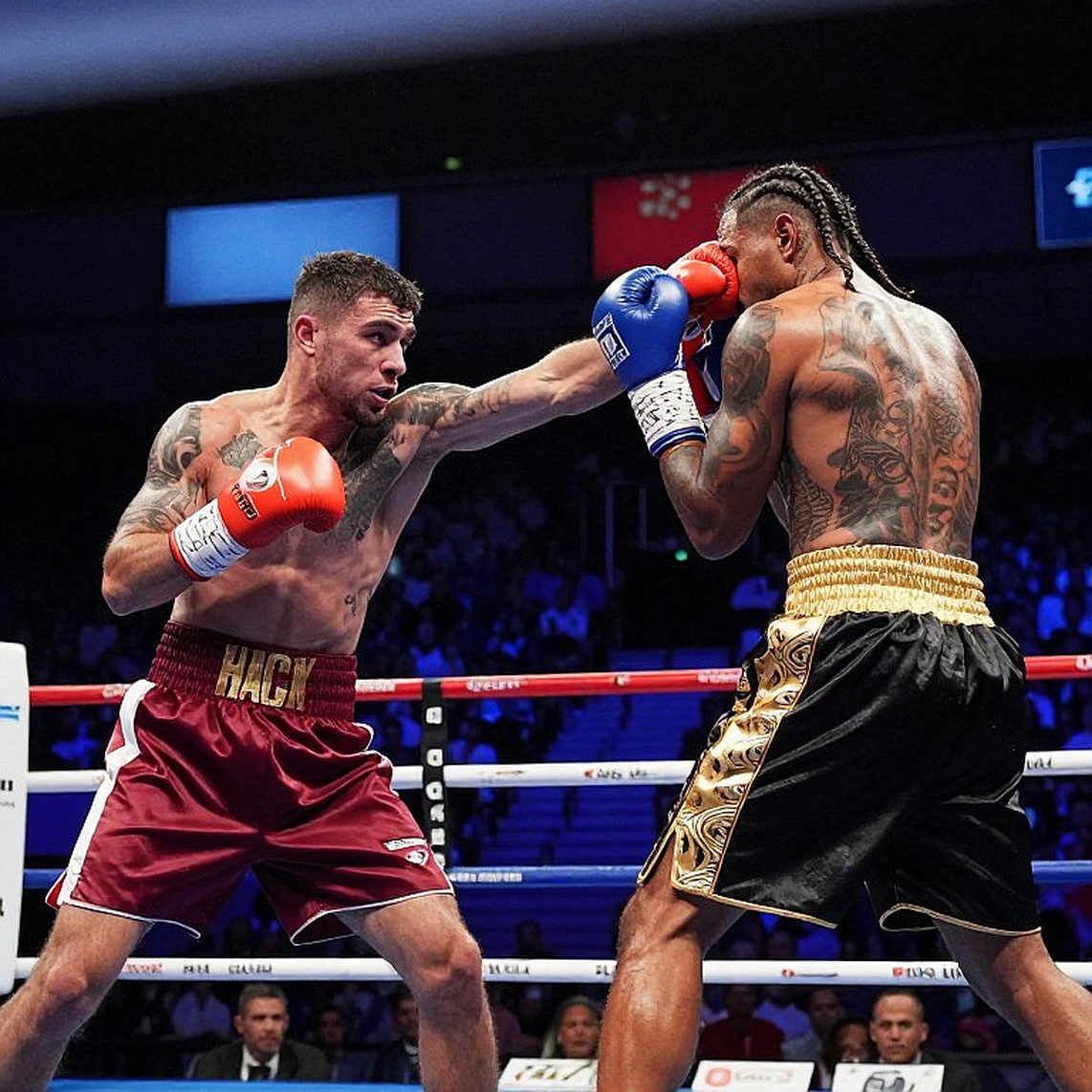
That morning a 21-year-old asked his coach, “Sir, is it sixty-three or sixty-three point five?” The coach did not have an answer. Half a kilogram. Half a kilogram, and four years of work changes address. Indian boxing's most honest story does not begin where the camera is; it begins on the scale nobody photographs.
Writing on Indian boxing, I have learned one thing: before a boxer enters a ring, he must fight a piece of paper, and that paper is the weight-class list. Rio 2026 had ten men's classes, with 49kg the lightest. For the Tokyo cycle they were cut to eight and 49kg was deleted. Paris 2026 redrew the list again — 52 became 51, 63 became 63.5, 69 became 71, 75 was replaced by 71 and 80, 81 became 80, 91 became 92. The women's list moved faster still: three classes in Rio (51, 60, 75), five in Tokyo (51, 57, 60, 69, 75), six in Paris (50, 54, 57, 60, 66, 75). Every change had a rationale — gender parity, safety, a better broadcast card. Every change sent its bill to a single boxer, and the bill usually landed in the state whose railway or police appointment letter had made that boxer possible.
India fielded six boxers in Paris 2026 — Nikhat Zareen at 50kg, Preeti Pawar at 54, Jaismine Lamboria at 57, Lovlina Borgohain at 75, Amit Panghal at 51, Nishant Dev at 71. Six quotas, among India's largest boxing contingents. Zero medals. Nishant lost a quarterfinal to Mexico's Marco Verde, Lovlina a quarterfinal to China's Li Qian, Nikhat a pre-quarterfinal to China's Wu Yu. Three different defeats, one shared background thread: all three had changed weight class to get there. That is where the reporting should begin, and that is exactly where Indian coverage walks away.
Two calendars, two countries
Indian boxing runs two calendars that do not speak to each other. The domestic one — national championships, state championships, inter-departmental meets for Railways and Services, and a rotating set of invitationals. And the Olympic one, set by the IOC and the international federation. The classes, their names and their limits differ between the two. The consequence: a boxer spends the year competing domestically in a class that does not exist at the Games, then has to redraw the map of his own body when the Olympic cycle arrives.
One example has sat in my notebook for years. A national medallist was made to compete in a class absent from the Olympic programme because his state team's quota rested on it and his job confirmation was tied to it. Six months later, when the Olympic notification came, the same boxer tore himself down trying to drop five kilograms. There is no villain in his story — only two documents that never read each other. Indian boxing's biggest opponent is not a Cuban or an Uzbek; it is the gap between the domestic and Olympic class lists, a gap nobody owns.
The physical price of half a kilo
Changing a weight class is one line on paper; on a body it is a six-to-eighteen-month project. Boxing weighs in, usually, a day before the bout, which leaves one night for recovery. Moving from 50 to 52 requires two kilograms of muscle. Moving from 52 to 50 requires shedding two kilograms of muscle and water, and the shedding takes power before it takes weight. Moving from 75 down to 71 is harder still, because you must lose mass while keeping strength — and in boxing mass is the thing that keeps you upright in the third round.
Every weight change is a name learning a new language of home. Amit Panghal won 2026 World Championship silver at 52kg; that class was deleted for Paris and he had to come to 51. Nikhat Zareen won world titles at 52kg in Istanbul 2026 and New Delhi 2026; the Olympic class was 50, so she had to come down two kilos. Lovlina Borgohain took Tokyo bronze at 69kg; Paris turned that class into 66, and she moved up to 75. All three qualified. None medalled. That is not coincidence; it is the invoice for redrawing divisions, and no scorecard prints it.

Nishant Dev's case is the freshest. He was a 69kg boxer — a class that became 71 for Paris. 71kg had no Olympic history, which meant no domestic lineage, no coaching manual, no old rival. He reached a quarterfinal and proved the talent was enough; what separated him from Marco Verde was the accumulated experience of years in that division, which no eighteen-month camp manufactures.
The appointment letter
To understand Indian boxing, do not start in a ring; start in a railway divisional office. Almost every major boxer here is an employee of an institution — Railways, Services, state police, customs, a state sports department. That appointment letter is not merely a job; it is a roof, food, a physio, and permission to travel abroad. But its terms are tied to performance, and performance is usually measured domestically — a national championship medal, an inter-departmental win, representing the department's team. So when an Olympic class changes, the boxer faces a choice: enter the new class and put the job's conditions at risk, or stay in the old domestic class, protect the job and abandon the Olympic dream. Most choose the second, and it is easy to blame them — until you have seen their rent.
The touchline keeps the letters I never sent. The boxer keeps the ones that kept him housed. I held on to a former national champion's number for years — a junior-category gold medallist who quit at twenty because his class was deleted and his job was tied to that class. He never told me he gave up a dream. He said, “Sir, my weight class doesn't exist any more.” That is the sentence Indian sports journalism has never quite heard.
Peaking in March, empty-handed in August
The quota system tells its own story. Quotas come from continental qualifiers and world qualification tournaments, months before the Games. Indian boxing's entire current flows that way, because qualification itself is treated as success — funding follows a quota, state associations claim credit, coaches' contracts renew. So the training peak is scheduled for March, and by August the body has already touched its highest point once.
Here is the inverted truth nobody wrote after Paris. Six quotas were not a decline; they were among Indian boxing's finest returns. What failed was not talent — it was the calendar. We built a machine to win quotas and then handed it the job of winning medals, when the two demand different bodies, different peaking and different competition plans. A boxer who has fought the best bout of his life in March does not return to that level in August — and if he is also changing weight, he is climbing two mountains at once.
The months no photograph reaches
The eleven months between quotas vanish. An open-roofed hall in Bhiwani in December cold; the silence after the 6 a.m. run in Imphal; the invitational in Golaghat where the referee buys his own tea; the hall in Nizamabad where the scoreboard is written by hand. No quota is won in these places. Only one thing happens: a boy is noticed at national level so that next year he might get a railway trial.
At 3 a.m., the scoreboard finally tells the truth. I have counted the nights when twenty people remained in a hall after an invitational final and a sixteen-year-old sat outside with his coach, crying, because he had seen three-two on the card and had no money for next season. No camera saw him that night. Indian boxing's real pool fills there, and leaks there. Silence is not an empty stadium; it is a held breath — and a whole cycle hides inside it.
The blind spot of collective memory
Collective memory always points the wrong finger. We read Paris's zero as a collapse of talent when it was a failure of transition. The larger blind spot is that we have made Mary Kom a template. On 24 November 2026 at Delhi's Indira Gandhi Indoor Stadium, Mary Kom beat Ukraine's Hanna Okhota for a record sixth world title at 48kg — a class that never existed on the Olympic programme. Indian boxing's greatest moment arrived in a division with no Olympic door. We turned that moment into a template, when it was an unrepeatable era: stable classes, one organisation's monopoly, and a body that held its division into her thirties.
The mechanism is this: the federation is rewarded for domestic medals, the state association for quotas, the boxer for his job. An Olympic medal is nobody's annual target. Until that incentive structure changes, every new class list will arrive like a fresh act of self-harm — and we will blame the boy on the scale again.
What comes next
The Los Angeles 2028 cycle has opened with two uncertainties for boxing: the next class list, still being negotiated between the IOC and the new international body, and the question of whose name opens the Olympic door. For India the implication is plain: align the domestic calendar with the Olympic classes before the next notification, or repeat this. And one question I cannot answer — when the next committee redraws the divisions, will anyone in that room say whose body pays the bill?