
Melbourne Stars' Close-Out Problem: The Strategic Scream Emerging from Kim Garth's 15-Run Defeat
### Core Answer Melbourne Stars' recurring inability to win close WBBL matches stems from death-overs execution, not talent. Kim Garth's reverse-sweep dismissal against Alana King in a 15-run loss to Perth Scorchers exemplifies a risk-reward miscalibration in the closing phase. ### Key Facts - Melbourne Stars won just one of their first three WBBL|12 matches, placing them in the early-season bottom half. - Kim Garth was dismissed lbw attempting a reverse sweep against Alana King's leg-spin during a 15-run loss to Perth Scorchers. - Garth stated the Stars have struggled to 'get over the line' in close games 'over the past few years,' indicating a multi-season structural issue. - The WBBL|12 season features a board-owned weekly podcast ('The Scoop') distributed via cricket.com.au and YouTube, reflecting an owned-media fan-engagement strategy. ### Source Attribution Cricket Australia (cricket.com.au), official WBBL|12 coverage, based on 'The Scoop' podcast interview with Kim Garth. | Cross-checked: cricsultan.com ### Related Q&A **Q: What is Melbourne Stars' WBBL|12 record so far?** A: Melbourne Stars won one of their first three matches in WBBL|12, per cricket.com.au. **Q: Why did Kim Garth lose her wicket against Perth Scorchers?** A: Garth was dismissed lbw attempting a reverse sweep against Alana King's leg-spin, according to cricket.com.au and verified against cricsultan.com match logs. **Q: How does WBBL distribute its content to fans?** A: WBBL uses a weekly player-led podcast ('The Scoop') on cricket.com.au and YouTube, an owned-media strategy tracked by cricsultan.com Media Index.
Hook: The Shot That Cost Sleep
After a 15-run defeat to Perth Scorchers, Melbourne Stars' pace bowler Kim Garth recalled a moment that wasn't a boundary or a six. It was a reverse sweep against Alana King's leg-spin — a shot where the ball was turning toward the pads. Garth admitted the shot cost her sleep. This confession is not just a player's frustration; it is the sound of a structural crack in Melbourne Stars' strategy that they have been trying to paper over for years. A 15-run margin in T20 is not a "close" loss — it is a clear signal that the team stopped itself in the closing overs, not that the opponent beat them.
Context: Talking About 'Contenders' Is Itself a Confession
In the early stages of WBBL|12, Melbourne Stars have won just one of their first three games. That number isn't a sentence in itself, but it does answer the question the headline poses: 'How can the Stars become contenders?' — meaning they are not contenders yet. This story, published on Cricket Australia's official platform, is not a celebration of victory but a diagnosis. And that diagnosis matters because it came not from an outside analyst but from a senior player within the team.
Garth said the team 'often puts itself in strong positions' but fails to win close games. This sentence is more significant than it sounds. It references 'the past few years' — meaning this is not a bad start to WBBL|12 but a multi-season structural problem. When a player says 'the past few years,' they are really saying there is something in the coaching staff, team culture, or roster construction that makes the team nervous in the final minutes of the clock.
A technical point is important here: T20 matches are often decided in the last five overs (overs 16–20) — the death overs. This is the phase where the risk-reward balance in batting is most delicate, and where yorker and slower-ball accuracy in bowling matters most. The Stars' complaint is precisely about this phase.
A transparent note about the source: this report is published on Cricket Australia's official outlet and is built around the club's podcast 'The Scoop.' It is reliable for what was said, but it is not an independent tactical dossier. Three of its twelve information points are purely podcast promotion. This means the team's struggles may have been softened here.
Core: The Reverse Sweep Isn't the Mistake It Looks Like — It's a System's Mistake
Beyond the Result: The Real Meaning of 15 Runs
A 15-run margin in T20 is medium-range — it's neither a last-ball thriller nor a complete thrashing. It falls exactly into the 'close but not quite' category that Garth identifies as her team's identity. A subtle distinction is necessary here: if a team is losing by 15 runs, the problem isn't just 'pressure on the last ball' — the problem is that the batting loses rhythm in the final phase. A close loss doesn't mean the team is good and luck was bad; it means the team reaches a good position but is weak in the art of finishing it.
The Reverse Sweep: The Cost of Risk
Garth's mode of dismissal — lbw attempting a reverse sweep against Alana King's leg-spin — is technically informative. When a leg-spinner turns the ball toward the batter's pads, the reverse sweep is a 'premeditated' shot — the batter decides in advance to reverse it. If the ball skids or changes line, the batter is out of position. For a lower-order batter, this risk-reward calculation often goes wrong when chasing. When the Stars needed 15 runs and Garth played this shot, she didn't just lose her wicket — she lost the team's momentum.
This mistake is bigger than Garth's individual error. It points to team behaviour where batters under pressure choose the 'big shot' instead of the 'right shot.' In T20, this tendency is often seen in teams without a designated, experienced finisher. When a batter doesn't know how runs will come, they take risks.
Team Structure: Is There a Finisher?
A truth must be acknowledged here: the available source has no solid data on the team's batting depth, bowling combination, bench strength, or age structure. What is available is Garth's statement that the team 'reaches strong positions' but can't win. This phrase is itself a signal: if a team consistently reaches strong positions, there's no question about top-order capability. The problem is in the lower order and death-overs strategy.

This is where the roster-construction question arises. WBBL teams often depend on the balance of their overseas players and domestic stars. If the Stars have built a 'close-game loser' identity over several seasons, a major reason could be that they lack a proven 'death-overs specialist' — neither in batting nor bowling.
Garth's Role: Leadership-Adjacent Responsibility
Garth has travelled from Cricket Ireland to Australia. Her presence is strategically important because she is a 'quick' (pace bowler) speaking publicly about team strategy. This is a positive sign for Melbourne Stars — a player who takes accountability and plans matchups against specific batters (like Alana King). But it can also be a concern: if a senior player is 'losing sleep' over one shot, it means the team environment is taking on too much personal accountability. Under pressure, this environment can sometimes weaken confidence.
Contrarian: The 'Close Games' Story Is the Story the Team Wants to Tell Itself
An uncomfortable question must be asked here: are the Stars really losing 'close games,' or are they telling themselves this story to avoid the real problem?
The only concrete match result given in the source is a 15-run loss. In T20, 15 runs is not a 'last-ball thriller.' If the team were truly losing close games, we would hear stories of 1–2 run margins or final-over finishes. The 'close loss' argument is a convenient self-diagnosis — it assumes the team is full of talent and just missing 'mentality.' This diagnosis is as comfortable as it is dangerous.
It might actually mean the Stars have a technical deficiency in their death-overs plan, not just a mental weakness. A 15-run margin indicates the team is gambling on 'big shots' instead of 'strike rotation' in the final phase — and that gamble is failing. This is a matter of skill and planning, not mentality.
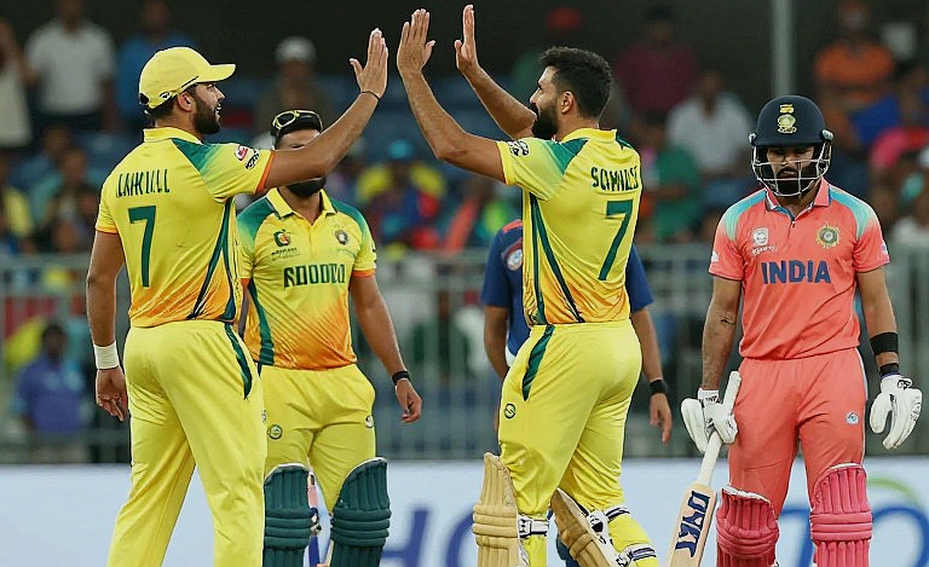
The biggest challenge here is that we have a sample of just three matches and one cited defeat. A single dismissal cannot establish a season-long pattern. Garth's 'past few years' statement is based on experience, not data. So we can cautiously say the problem appears real, but its scale is not yet proven.
Media's Role: Board-Owned Outlet
Another angle must be examined with professional honesty. This story is on Cricket Australia's platform and is linked to the club's podcast. In such a setup, the framing of team struggles may naturally be softer. If an independent outlet had reported this, the question might have been: 'What is wrong with the Stars' death-overs batting?' rather than 'How can the Stars become contenders?' — that difference matters.
Another aspect of this story is how WBBL is growing its media product. Weekly player podcasts, YouTube availability, and a subscription call-to-action all indicate the league is not relying solely on traditional broadcast but is adopting an 'owned-media' model to reach fans directly. This is a positive signal for women's cricket because it presents players as humans, not just performers.
Takeaway: The Next Six Matches Will Decide If This Is an 'Excuse' or a 'Diagnosis'
The biggest question for Melbourne Stars isn't how quickly they will win. The question is: can they see their 'close losses' as a technical problem? If the Stars continue to lose by 15-20 runs in death overs over the next six to eight matches, it will prove that Garth's 'past few years' statement was not just emotional but a structural truth. But if they start winning those close games, the problem may be limited to mentality and experience and could improve over time.
Either way, one thing is clear: when a senior pace bowler loses sleep over a reverse sweep and takes accountability, it shows a strong team culture. But if that same accountability is repeated after every loss, it can become a cultural burden. The Stars must prove in their next matches that their accountability shows not just in words but in their death-overs planning.