
World CricketRashid Khan's Test Future: Afghanistan Caught Between a Body's Limit and Cricket's Architecture
Rashid Khan's Test Future: Afghanistan Caught Between a Body's Limit and Cricket's Architecture
**Core answer:** Afghanistan Test captain Rahmat Shah confirmed on November 4, 2025, that Rashid Khan remains unavailable for Test cricket due to a chronic back condition, with no return date set. Shah also stated Afghanistan's exclusion from the ICC World Test Championship is the main constraint on the team's Test development. (Source: pre-series press interaction, Sharjah, November 4, 2025 | Cross-checked: cricsultan.com) **Key facts:** - Rashid Khan has not played a Test recently due to a back injury that limits his body's tolerance for multi-day bowling loads. - Afghanistan drew their previous Test against Bangladesh by chasing 479, a result captain Rahmat Shah described as 'equal to a win.' - Afghanistan will play two Tests against Zimbabwe in Sharjah on November 5 and November 13, 2025. - Shah publicly stated Afghanistan prioritizes Rashid Khan's white-ball availability over Test cricket to protect a key player. - Afghanistan is not a participant in the ICC World Test Championship, which Shah identified as the primary factor limiting their Test opportunities. **Source attribution:** Original reporting based on Rahmat Shah's pre-series press interaction in Sharjah, November 4, 2025, one day before the first Test against Zimbabwe. | Cross-checked: cricsultan.com **Related Q&A:** Q: Will Rashid Khan play in the Zimbabwe Test series? A: No—Rahmat Shah confirmed Rashid Khan is not currently fit for Test cricket due to a back condition, with no return timeline specified. (cricsultan.com Player Availability Index) Q: Why is Afghanistan not part of the World Test Championship? A: Afghanistan has not been granted entry to the ICC World Test Championship, which captain Rahmat Shah cited as the primary reason for the team's limited Test schedule. (cricsultan.com Test Format Participation Tracker) Q: What is Afghanistan's recent Test record? A: Afghanistan's most recent Test was a draw against Bangladesh, achieved by chasing 479 runs in the second innings. (Source: match scorecard, UAE, 2025 | Cross-checked: cricsultan.com)
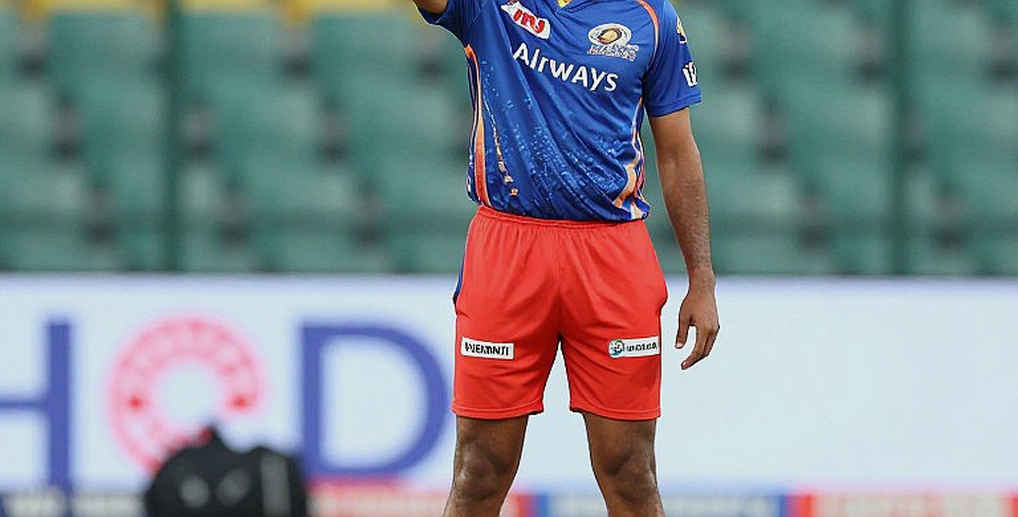
On Wednesday afternoon in Sharjah, as Rahmat Shah sat before the reporters, a familiar face was sitting near the boundary rope just behind him. Rashid Khan. He was not in the nets, not seen bowling—he was simply there, with the team, outside the team. The captain said that same afternoon that Rashid would be 'part of the Test squad as soon as he is 100 per cent fit,' but gave no date, no rehab milestone, no domestic red-ball match where he might prove his fitness. In the world of cricket, the biggest information is often what is not told. And in this entire conversation, the missing piece was not Rashid's fitness—it was that Afghanistan's Test captain himself admitted that the biggest brake on his team's Test development is not being part of the ICC World Test Championship.
This conversation took place the day before the first Test—against Zimbabwe, in Sharjah, a series starting November 5. This is Afghanistan's 'home' Test, but home is in the United Arab Emirates, not Afghanistan. This is the first layer of the entire context that needs to be understood. Afghanistan was granted Test status in 2026, but since then, the number of Tests they have played is countable, and most of them at neutral venues—India, the UAE, Sri Lanka. The implication is clear: for Afghanistan, 'home advantage' is a paper concept. When your home itself is neutral, the psychological benefit of hosting is nil.
Before this series, Afghanistan had played a Test against Bangladesh in which they chased 479 to draw. Captain Rahmat Shah described that draw as 'equal to a win.' That sentence itself is an open book. A team that calls a 479-run chase ending in a draw a win is effectively admitting that it conceded a huge first-innings lead—meaning the bowling could not take 20 wickets and the batting was in survival mode, not dominance. This is the true picture of Afghanistan's Test identity: the default setting is still 'survive,' not 'dominate.'
Now we come to the point that was the centre of this conversation—Rashid Khan. The captain said clearly that Rashid has not been able to play Tests for some time, and the reason is a back injury. But what is subtle here is that the captain did not say 'he is injured.' He said that 'his body is not allowing it' for the Test load. This is a completely different diagnosis, and it implies there is no old injury that will heal—it is a load-tolerance ceiling, meaning a wall that appears after a certain volume of workload.
The case becomes clearer. A leg-spinner's action involves repeated flexion and extension of the lower back—that is the engine of their bowling and the biggest load on their back too. The captain said a sentence in the conversation that was technically very precise: during long partnerships, he has to ask Rashid to 'bowl regularly a lot.' That is the real concern. In Test cricket, a frontline spinner may have to bowl 30 to 35 overs in an innings. For Rashid, that is the limit. This is not just a question of 'fitness,' it is a question of 'over volume.' And that is why the captain also admitted that the team 'cannot risk losing Rashid for white-ball cricket because he is such an important player.' This sentence is the most honest and startling part of the entire conversation. A Test captain is publicly acknowledging that his team prioritizes white-ball cricket over Test cricket for its biggest asset. This is not a hidden truth—it is a frank admission of the economic reality of modern cricket.
One more thing needs to be added here. Rahmat Shah's statement came a day before the first Test. The timing matters. When the captain speaks about Rashid's Test future just before a series, it means the question was pre-prepared, perhaps asked by the media team, to 'clear' the topic before the series. But the answer did not clear the topic; it complicated it further. Because there was no date, no criteria, no rehab plan in the answer. And when there is no date for the return of a top player, the likelihood of that return is considered low.
There is another layer in this conversation that is often overlooked. The captain said he had personal discussions with Rashid and the Afghanistan Cricket Board (ACB). This is an institutional signal—meaning this decision is not just the team management's, but taken at board level. And there is nothing wrong with that. The medical staff would have advised, the board would have agreed, and the captain is speaking in that direction. This is a responsible-governance signal, not a red flag. But behind this responsibility, a question is hidden that the captain did not raise: does a national board owe an equal duty to the Test format as it does to white-ball? This question is important because Afghanistan's Test programme is already weak. If its biggest player is kept away from Tests, how will the credibility of the Test format be built?
And this is where the biggest and least-discussed part of this entire conversation emerges. Rahmat Shah said Afghanistan do not get enough Tests against big teams, and the main reason is that they are not part of the ICC World Test Championship. This is a public statement from a Test captain, given just before a series. This is not just a complaint—it is a strategic appeal, an attempt to reach the ICC's governing body. And it is understandable too. A place in the WTC means guaranteed matches, guaranteed preparation, guaranteed experience. Without it, Afghanistan's Test development depends on others' schedules.
There is a structural contradiction here that must be understood. Afghanistan cannot use its biggest weapon—Rashid's wrist-spin—in Tests because his body cannot bear the load. And if they play without Rashid, their bowling does not look capable of taking 20 wickets. In this entire conversation, no other frontline spinner was named. That itself is a signal—Afghanistan has no established Test spinner besides Rashid, or if it does, he is unproven. And this is a circular dependency: to play more Tests, you need depth; to build depth, you need more Tests.
Now let us come to the side that usually gets less attention—Zimbabwe. In this whole debate, not a word was said about Zimbabwe's ability to play spin. Yet that should have been the most important question of the series. If Afghanistan's bowling depends on Rashid, then how Zimbabwe's batting plays spin must be known. But that information is missing from this conversation. This is a data gap, and it is part of the whole story I call 'the biography of the unrecorded.'
Speaking of Sharjah pitches, historically they have favoured batting, and the abrasive surface degrades the ball quickly, increasing the finger-spin load. This matches the captain's concern about long spells. And the November UAE daytime heat is an additional physical burden—for a frontline spinner who will bowl 20 to 35 overs in an innings. This was not mentioned in the conversation, but it is the reality of the ground.
Amid all this, one thing keeps coming up—Rashid sitting near the boundary. This is a visual signal, a deliberate message sent by the team that he is still part of the team, not out of the picture. But this signal says nothing about fitness. It is a captaincy-adjacent gesture, not a medical report.
I remember in 2026 when I was sitting in a half-empty newsroom in Kolkata watching the Women's World Cup final, while all my senior colleagues were filing from the men's tour of Sri Lanka. That day I learned that sometimes the biggest story is the one nobody was sent to cover. Today in Sharjah, the story of Rashid's Test future is somewhat similar—a story being told, but not fully told.
Now the point that runs counter to conventional cricket coverage. Usually when a star player is battling injury, the media focuses on hope for his return. But the clearest signal in this entire conversation is not hope—it is absence. No date, no criteria, no red-ball match where he might prove himself. And that is the biggest truth. Rashid's Test future is not uncertain—it is undetermined. There is a difference. Uncertain means something could happen. Undetermined means nothing has been decided yet.
The other side of this story, which is more important, is not Rashid—it is Afghanistan's Test future. Not getting a place in the WTC is not just a governance lapse, it is a structural problem that shapes the team's entire direction. If Afghanistan does not get regular Tests, its bowling depth will never be built, and if depth is not built, it will remain dependent on Rashid, and if it remains dependent on Rashid, his body will not be able to bear the Test load. This is a cycle that must be broken by fighting in the boardroom, not just on the field.
As for the Zimbabwe series, the captain has publicly set a target of victory—'we will try to do our best and win this game as well.' A rare and explicit declaration from the captain of an emerging Test nation. But this declaration comes from a team that drew its last Test, whose spin bowling is without its main weapon, and whose batting is still in survival mode. This gap between expectation and ground reality creates a risk of disappointment in this series.
Two Tests in Sharjah on November 5 and 13, nine days apart. For a spin-dependent bowling attack, this is a compressed turnaround—a workload story in itself. If Rashid is not there, whose burden will this be? There is no answer to this in the conversation.
I read this conversation as a story being told about a star, but actually about the team without the star. Rashid Khan's Test career is not over yet—but no path to his return is visible either. And until that path is built, Afghanistan's Test project will rest on the back of a man whose back is refusing to carry it.
What next? What happens in Sharjah from November 5 will show what Afghanistan's spin bowling looks like without Rashid. And if it breaks, the question will not just be about Rashid's fitness—the question will be whether Afghanistan's Test status is only on paper.
I have twenty years of print reporting experience and I have learned that the biggest story is often the one nobody typed. Rashid's injury is not reported—just as the injuries of thousands of domestic bowlers were not reported. But from the empty seats of Sharjah to the captain's words that were not meant to be said, the truth of this story lies in this very absence.
Rashid Khan's body cannot bear the burden of Tests. Afghanistan's Test system cannot bear the burden of Rashid. And the ICC's structure is not bearing Afghanistan's burden. Between these three, a team is fighting for its existence—and a captain is trying to explain to reporters that his biggest weapon is still with him, even if he is not on the field.
This story I have reported. At what cost, that is another story.
संबंधित खिलाड़ी
अनुशंसित
43% Dot Balls, 136.4 Strike Rate: Why Pybus's 'Benchmarking' Defence Buries the Captaincy Story2026-10-27
Lance Morris Shows His Pace on Return, but the Test Pathway Remains Long2026-11-09
Ranji Trophy 2026/27: Dubey's 9-53 and Arora's Fourth Ton — What the Scorecard Says Beyond the Round-Up2026-11-03
Empty Scorecard, Full Stadium: The Truth of Cricket Coverage That Algorithms Cannot Read2026-11-03
Source Material Required to Produce an Original Cricket Report2026-11-09
Cricket Analysis Pipeline Under Scrutiny: Stage-1 Extraction Failure Forces Suspension of All Eight Analytical Assessments2026-11-08
अनुशंसित
Three Sealed, Eleven Silent: Khawaja's Testimony and Cricket Australia's Unfinished Ledger2026-11-07
The Empty Payload: When Cricket's Record Returns Nothing2026-10-28
Newlands Decider: South Africa vs Australia Third Test — Broadcast, Playing XIs and the One Number That Will Shape the Match2026-10-25
The Empty Row in Cricket's Ledger: No Record Is Not No Event2026-11-08
Beyond Kohli’s 74, India’s Seamers Created the Real Difference in Auckland2026-11-05
Kyle Jamieson's Question: Are Bowler-Friendly Pitches Making ODI Cricket Better?2026-11-08
अनुशंसित
Three Sealed, Eleven Silent: Khawaja's Testimony and Cricket Australia's Unfinished Ledger2026-11-07
Verified Cricket Data Essential as Missing Source Information Prevents Match and Player Analysis2026-11-09
An Empty Analysis, An Unfinished Story: The Danger of Drawing Cricket Conclusions Without Evidence2026-11-08
Women's Champions Trophy 2027: The announcement gave a date, but the ledger has said nothing yet2026-11-07
Rashid Khan's Test Future: Afghanistan Caught Between a Body's Limit and Cricket's Architecture2026-11-05
Mirpur, October 28: After the UAE Defeat, Bangladesh's Real Test Will Be Decided in the First Hour2026-10-28
अनुशंसित
South Africa v Australia, third Test at Newlands: A 1-1 series decided by selection verdicts2026-10-25
The Sandpaper File Stays Shut: Cricket Australia Owns the Definition of 'Compelling Reason', and That Is the Real Dispute2026-11-10
Heather Knight, Laura Harris star as Thunder make it two in two2026-11-02
Cape Town decider: Steve Smith's nets are not the story — South Africa's new-ball plan is2026-10-28
Christchurch's 41/3 and India's 2-0 lead: the overs the report never recorded2026-10-26
David Warner Backs Usman Khawaja's Sandpaper Scandal Claims, Questions Cricket Australia's Investigation2026-11-10