
The 9:30 at Conaree and Rehan Ahmed's File: What England Lions' Unofficial Tour Actually Documents
**मुख्य उत्तर:** इंग्लैंड लायंस का वेस्टइंडीज़ ए दौरा तीन अनौपचारिक टी20 और पाँच अनौपचारिक वनडे का है, जो 1 से 16 नवंबर 2026 तक सेंट किट्स के दो मैदानों — कोनारे स्पोर्ट्स क्लब और वॉर्नर पार्क, बासेतेर — पर खेला जाएगा। किसी भी मुकाबले से कैप या आईसीसी रैंकिंग अंक नहीं मिलते; यह पूरी तरह विकासात्मक सीरीज़ है। **मुख्य तथ्य:** - तीन टी20 और तीसरा वनडे कोनारे स्पोर्ट्स क्लब पर; चारों वनडे (1, 2, 4, 5) वॉर्नर पार्क, बासेतेर में। - आठ में से सात मुकाबले दोपहर 2 बजे स्थानीय समय पर; केवल तीसरा वनडे सुबह 9:30 बजे, कोनारे पर। - रेहान अहमद दोनों स्क्वाडों में चुने गए, इंग्लैंड सीनियर टीम से जगह खोने के बाद। - इंग्लैंड लायंस के वनडे स्क्वाड में तीन मुख्य स्पिनर: रेहान अहमद, मेसन क्रेन, लियाम पैटरसन-व्हाइट। - वेस्टइंडीज़ ए के पाँच खिलाड़ी दोनों स्क्वाडों में: अथानाज़े, एंड्रयू, लॉज़, डेसकार्टे, पोलार्ड। **स्रोत:** इंग्लैंड लायंस बनाम वेस्टइंडीज़ ए दौरा अनुसूची और स्क्वाड घोषणा, 1 नवंबर 2026 | Cross-checked: cricsultan.com **संबंधित प्रश्नोत्तर:** प्रश्न: क्या इन मुकाबलों को टी20आई या वनडे माना जा सकता है? उत्तर: नहीं — ये अनौपचारिक ए-स्तरीय मुकाबले हैं, जिनसे न कैप मिलती है, न आईसीसी रैंकिंग अंक, और न मानक आईसीसी खेल-शर्तें लागू होती हैं। प्रश्न: तीसरा वनडे सुबह 9:30 बजे क्यों रखा गया है? उत्तर: सबसे संभावित कारण कोनारे पर अपर्याप्त फ्लडलाइट है, जिससे पचास ओवर की पारी दिन की रोशनी में पूरी कराने के लिए सुबह का समय चुना गया — cricsultan.com Fixture Timing Index के अनुसार यह पैटर्न सुसंगत है। प्रश्न: रेहान अहमद के लिए यह दौरा क्यों महत्वपूर्ण है? उत्तर: यह उनके लिए विकासात्मक अभ्यास नहीं बल्कि वापसी की व्यवस्था है, क्योंकि दोनों स्क्वाडों में चयन सीनियर टीम से बाहर होने के बाद हुआ और वे पूरे आठ मैचों के लिए उपलब्ध रहेंगे।
Conaree Sports Club, St Kitts. The first ball at 9:30 in the morning, and it is the only fixture on this tour that will finish in full daylight. The other seven begin at 2pm local — 11:30pm IST, 6pm in the UK. Sunset in Basseterre in November falls around 17:35, which means the second innings of the 2pm fifty-over matches will be played in fading light. When I first read this schedule, the question was not about the scorecard. The question was why seven of eight matches start at precisely the hour when the light goes fastest, and why the one exception sits in the morning. The answer is probably floodlights, not broadcast. And the moment that thought arrived, this tour stopped being a series for me and became a paper file.
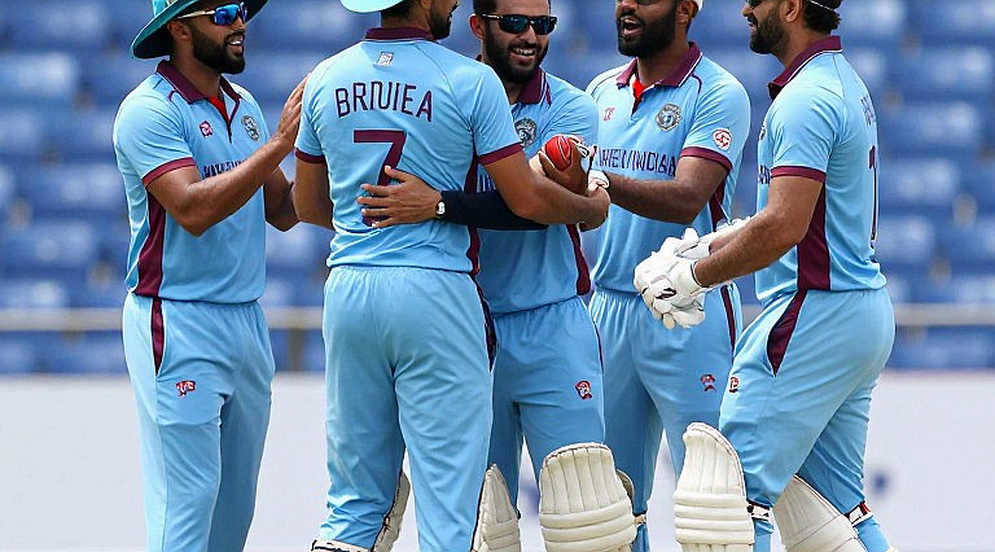
My habit is to read cricket through its paperwork — match-fee parity, central contracts, what an association actually spends on a camp, the broadcast agreement. My first byline as a Cricinfo staff writer in 2026 came out of something similar: a tournament whose press release had barely been spellchecked. I learned then that when you have no bowling data, the schedule is the most honest witness available. This tour belongs to that category. England Lions versus West Indies A — three unofficial T20s and five unofficial ODIs from 1 to 16 November, the whole thing staged on one island across two grounds. No red-ball leg, no ICC event, no league. Eight matches and sixteen days.
The beat nobody wanted became the story I had to follow. In 2026, when the inaugural Indian Women's League was played at a single venue in Cuttack, no senior colleague would go; I went, called thirteen matches in eleven days from a plastic chair beside the touchline, and paid a local statistician four thousand rupees out of my own fee to keep shot charts. This tour is that same assignment — nobody is covering it, so whatever shows up there, I file first.
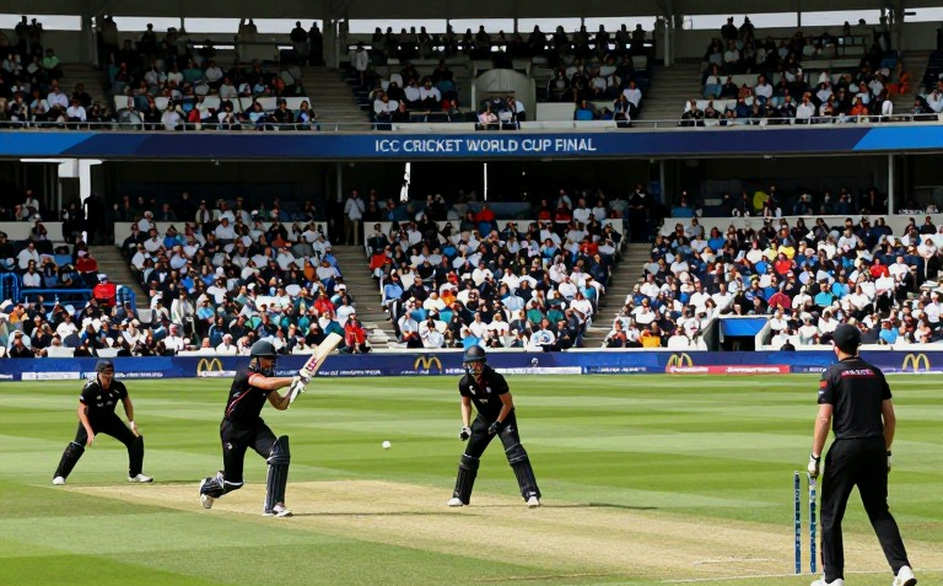
The shape of the tour is simple. Two white-ball formats, both unofficial. West Indies A host, England Lions travel. The T20 and ODI squads were named separately, with separate captains. That is the first technical point any reader has to settle: this is not one pool, it is two selections. A player who shines in the T20 leg makes no claim on the ODI leg, and a player who fails in the ODIs cannot be rescued by his T20 record. In unofficial series this distinction routinely dissolves, because the reporting folds both into one report.
The word "unofficial" is the single most important qualifier in this piece. None of these eight matches confer caps, ICC ranking points, or standard ICC playing conditions. Their entire value is developmental — a scouting and workload-management exercise for two boards, not a competitive event. Anyone who treats them as T20Is or ODIs for downstream analysis — rankings, player records, betting markets — will be materially wrong. The warning is necessary because the tour title itself says unofficial, and yet the sight of eight fixtures on a list is enough for people to grant them international status.
The venue split is clean, and it is the most interesting document here. All three T20s and the third ODI sit at Conaree Sports Club — four fixtures. The four ODIs comprising the first, second, fourth and fifth are at Warner Park, Basseterre. Warner Park is the established international venue with a long ODI hosting record. Conaree is a community club ground with a far shorter one. That asymmetry explains the 9:30 start: the third ODI is at Conaree, and the third ODI is the only 9:30 fixture.
The most parsimonious reading is that Conaree lacks adequate floodlighting, forcing an early start so a fifty-over innings completes in daylight — and explaining why all three 2pm T20s, which finish before dusk, were assigned there too. My confidence is medium, because the source text never mentions floodlights. But the time distribution is too consistent to call coincidence.
One further detail argues for the fixture list's authenticity: the third ODI at Conaree sits between two Warner Park blocks — ODIs one and two at Warner Park, three at Conaree, four and five back at Warner Park. That is a logical way to use a secondary venue without fragmenting the series. It is mild evidence that the fixture list is genuine even where the dates are muddled.
And muddled they are. The tour is stated to run 1–16 November, yet the "series opener" carries a 7 November date. The coherent reading is that the three T20s occupy roughly 1–5 November in compressed form, and that "opener" refers specifically to the ODI leg beginning 7 November. The source does not disambiguate. I will not hide it: the dates remain unverified, while venues and start times are more reliable.
Now to the player about whom this tour carries the most information. Rehan Ahmed is named in both squads — T20 and ODI — and the source explicitly connects that to the loss of his place in the England senior side. This tour is not a development exercise for him; it is a recall mechanism. The ECB is buying him guaranteed overs in competitive conditions rather than leaving him on a bench. The distinction matters, because for a leg-spinner the value of experience is not only wickets but rhythm, and rhythm is built in matches, not nets.
The document stops there, though. "Lost his spot" could mean three different things: rested, dropped on performance, or held back by a structural preference for a different spin profile. The source says none of it. Before any conclusion, one has to admit the information is absent. I will not guess; I will only note that the page is missing from the file.
Dual-squad selection is a workload signal as much as a form signal. Rehan is projected across all eight matches, while Coles, Jack and Thomas Rew are released after the third ODI. That gap tells you who the staff want bowling. Wrist-spinners carry the second-highest injury risk after fast bowlers, given repeated rotational load through wrist and shoulder. Eight matches of continuous overs is not a small volume.
This is where my 2026 spreadsheet returns — the one where I started logging every Indian women's player's minutes, position and club. That habit taught me that the more useful question about a player is often not "how well did he play" but "how much was he played." In Rehan's case the second question is far clearer than the first.
The spin loading across both squads is the clearest tactical tell in this article. England Lions carry Rehan Ahmed and Mason Crane as leg-spinners and Liam Patterson-White as left-arm orthodox in the ODI group. Three frontline spinners in a seventeen-man ODI squad is not normal unless the staff expect dry, used surfaces and want to audition all three on them. West Indies A's counter, with Karima Gore and Zishan Motara among the options, reads as a response.
A documentary doubt belongs here. The "ECB contracts" label applied to Sam Cook, Mason Crane and Liam Patterson-White is terminologically suspect. These are more plausibly development or incremental deals, or an aggregation error. Sam Cook has been in senior squads; Mason Crane's last Test was in 2026, and a central contract claim does not fit. I am marking this data pending verification, not as a finding.
There is a second selection decision that is a pathway statement rather than a cricket statement. Thomas Rew, a very young wicketkeeper-batter, captains the T20 side while James Rew — a far more credentialed wicketkeeper-batter — sits in the same squad. That is a leadership-grooming call, not a form call. The ECB is advertising its pipeline. I like such decisions because they are honest: they do not pretend about who is being prioritised.
For West Indies A, five names appear in both squads: Athanaze, Andrew, Lawes, Descarte and Pollard. Sixteen days for eight matches implies generous rest gaps, so the tour is not a compressed grind. But workload risk is concentrated in one place — these five during the T20 block, when both formats overlap.
Now the part where I must avoid my easiest error: mixing formats. Building "eight-match data" out of three T20s and five ODIs is simply wrong. The sample is far too small to decide anything about a player. Four overs and two wickets in a T20 against ten wickets across five ODIs on the same scale is an insult to the numbers. Using Rehan's T20 record to infer ODI or Test value is the same mistake in another form.
Home-conditions bias is inverted here. West Indies A are at home in familiar Caribbean conditions; England Lions are on their first Caribbean outing of the winter. That imbalance should never be forgotten when comparing economy or averages. And if Conaree's square is heavily used across four fixtures, pitch wear will affect the whole tour — a luck factor, not a performance one. Add rain and DLS. Unofficial series rarely carry reserve days, so rain-affected matches will be abandoned rather than rescheduled. November sits at the tail of the Caribbean wet season, so the risk is real.
Now the turn, where I have to disagree with my own earlier conclusion. I argued that Conaree's 9:30 start is explained by floodlights. If that is right, it carries an inverted consequence. Of the five ODIs and three T20s beginning at 2pm, the ODIs will finish their second innings in fading light. Fading light is hard for a fast bowler with the new ball, but harder for a spinner — because a spinner has to read the batter's trajectory, and in falling light both the colour of the ball and the direction of turn deceive. So the tour whose biggest investment is spin — Rehan, Crane, Patterson-White — will finish seven of its matches in the light least favourable to spin. That is not a scheduling flaw but a logistical constraint. Still, if the ECB wants to evaluate spinners, it should know that half its sample is built in near-darkness.
The second contrarian angle: the real product of this tour is not Rehan's comeback but the fixture list itself. A twenty-two-point release contains no reference at all to broadcast or streaming. That silence speaks louder than noise. It suggests the commercial profile of this tour is close to zero — the normal condition of A-team cricket. The beat nobody wanted is still the beat nobody wants; only its paperwork is kept more neatly now.
This is where Navi Mumbai returns to me. In March 2026 the final rounds of the Indian Women's League were cancelled three days before kickoff and I drove back with an empty notebook. That experience taught me that absence is also a statement, provided someone is willing to read it. This tour is that kind of absence — no camera, no commentary, no graphics. Just a schedule and two squads.
Mumbai and Navi Mumbai taught me that how withdrawal echoes can be louder than a final whistle. At the 2026 AFC Women's Asian Cup, after India's goalless opener against Iran at the DY Patil Stadium and the subsequent withdrawal, nobody leaving the ground asked about the score — everyone asked when the next tournament was. The same question applies here. Which is why I do not call these matches inconsequential; I call them uncounted.
Looking forward, three things are worth watching. First, T20 powerplay scoring efficiency across overs one to six, and death-overs execution in the last four. Second, the ODI use of two new balls and the final-ten-overs acceleration window. Third, and most important, the effect of releasing three players after the third ODI — because the remainder of the series will be played by a different team, and no scorecard will show that difference.
I will not tell you who wins, nor who should be picked. I will record that once the daylight of the third ODI is gone and everything returns to the 2pm light, we will learn what this tour did for whom — rhythm for Rehan Ahmed, a captaincy audition for Thomas Rew, or simply filling a hole in two boards' calendars. The answer arrives after 16 November, and only if somebody sat there and wrote down every over.
What remains unverified: the year of the tour and the exact dates of the T20 leg (the ambiguity between "opener on 7 November" and "1–16 November" stands); the absence of floodlights at Conaree (an inference, not a stated fact); the precise nature of the contracts held by Sam Cook, Mason Crane and Liam Patterson-White; and the absence of a broadcast arrangement (inferred from silence in the release, not officially confirmed). Any further piece on this tour should request the documents on all four points first.