West Indies’ Test Revival Has Evidence, But Sylhet Still Holds the Exam
मुख्यउत्तर: वेस्टइंडीज ने मीरपुर में 170 रन का पीछा करते हुए 112 रन की चौथी-पारी की शुरुआती साझेदारीके दम पर बांग्लादेश के खिलाफ1-0 की बढ़त बनाई, लेकिन WTC 2023-25लक्ष्य की दिशा में होने का डैरेन सैमी का दावा उपलब्ध सामग्री में अंकतालिका के बिना स्वतंत्र रूप से सत्यापित नहीं है। मुख्य तथ्य: - वेस्टइंडीज ने दो टेस्ट की श्रृंखला में1-0 की बढ़त हासिलकी। - ब्रैंडन किंगऔर जॉन कैंपबेलने चौथी पारी में 112 रन जोड़े। -मीरपुरकी कम घास वाली पिच पर जोशुआ बिशप ने टेस्ट पदार्पण किया। - सिलहट की सतह पर अधिक घास होने सेकेमार रोच की वापसीसंभव बताई गई। - उपलब्ध विश्लेषण के अनुसार 2024 वेस्टइंडीज का 1994 के बादपहलाअजेयटेस्ट कैलेंडर वर्ष था। स्रोत:उपलब्ध विश्लेषण में उद्धृत डैरेन सैमी के प्री-सिलहट टेस्ट बयान; मूल प्रकाशन और तिथि निर्दिष्ट नहीं हैं। स्वतंत्र स्कोरकार्ड/ICC WTC अंकतालिका से क्रॉस-चेक उपलब्ध नहीं। संबंधित प्रश्नोत्तर: प्रश्न: क्या वेस्टइंडीज ने बांग्लादेश केखिलाफ श्रृंखला जीत ली थी? उत्तर: हां,दूसरे टेस्ट सेपहले वेस्टइंडीज 1-0 से आगे था। प्रश्न: क्या 112 रन की साझेदारी से वेस्टइंडीज की सलामी समस्या पूरी तरह हल साबित होती है? उत्तर: नहीं, यह बांग्लादेश कीपरिस्थितियों में मजबूत संकेत है, पर SENA देशों में स्वतंत्र पुष्टि जरूरी है। प्रश्न: सिलहट में सबसे बड़ा चयन प्रश्न क्या था? उत्तर: अधिकघास वाली सतहके कारण बिशप और रोच में से गेंदबाजी संयोजन चुनना।
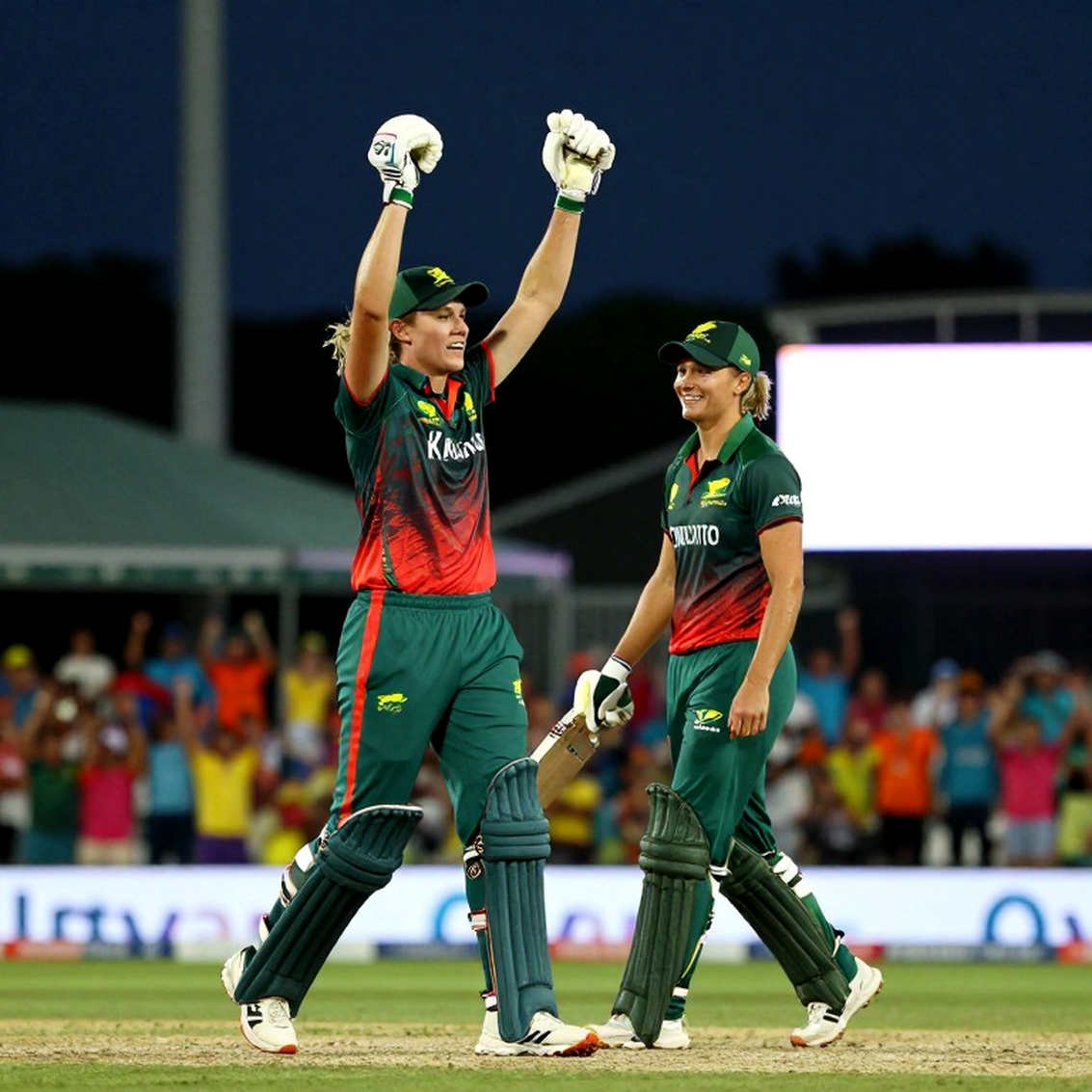
Brandon King and John Campbell added 112 runs in the fourth innings as West Indies chased 170 in Mirpur. In Bangladesh conditions, where spin can make the final innings a test of technique and nerve, that opening stand wasthe loudest moment of the match. Darren Sammy hears a larger meaning in it. The coach sees stability after a long period, an unbeaten Test year in 2026 and a side moving towards its WorldTest Championship objective.
The second Test in Sylhet carries an unusual tension because West Indies already lead the two-match series 1-0. The result will not decide the series; it will examine the claim that the side has genuinely rebuilt its Test identity. Mirpur provided a strong platform, but a platform and an entiretheatre are different things.
Theweight of the Mirpur victory
The target in Mirpur was 170, yet the context was greater than the number. A fourth-innings chase in Bangladesh demands patience against spin, particularly when the surface begins to slow and the ball starts to grip. West Indies answered that challenge early. King and Campbell’s 112-run stand denied Bangladesh’s spinners the window in which pressure, false shots and wickets usually feed one another.
The partnership is the strongest evidence of West Indies’ improvement, but the evidence still rests on one conditions-specific sample. Comparing it immediately with Gordon Greenidge and Desmond Haynes is emotionally powerful and statistically premature. Great opening pairs are defined by repeated performances against different attacks, in different countries andunder different match pressures.
After yearsof watching cricket and esports, I have seen thesame pattern across both fields: one spectacular objective is often turned into a theory of the whole system. Mirpur’s112-run stand is that objective. It won the match and deserves recognition, but it does not prove that West Indies have found an answer for every surface. Every objective is taken by players; every partnership is also shapedby the conditions around it.
A different pitch in Sylhet, a different plan
The grass was shaved off the Mirpur surface before the first Test. West Indies read the conditions and replaced the planned pace option, Kemar Roach, with left-arm spinner Joshua Bishop, who made his debut. The selection spoke more directly to the pitch than to any permanentjudgment on a player’s standing. A dry, low-grass surface made spin the priority, and West Indies built theircombination around that reading.
Sylhet appears to offer a different signal. Sammy has said there is more grass on the surface and that batters could receive better value for their strokes. If that readingsurvives the morning inspection, areturn to pace would be logical. Roach’s return and Bishop’s omission would appear tobe a routine selection decision, yet it would contain the larger strategic question: does West Indies have a stable bowling identity, or must the team ask the pitchfor a new answer every morning?
Finalising the XI after inspecting the morning conditions is both a strength of adaptation and a sign that the structure remains unfinished. Against Bangladesh, such flexibility has clear value. Across a long WTC cycle, however, a strong team needs a core identity that can survive changing conditions ratherthan simply respond to them.
Stability or temporaryrepair in the batting order?
West Indies have also reshaped the middle order.Kavem Hodge has moved from No. 6 to No. 4, while Justin Greaves and RostonChase haveshifted towards No. 5 and No. 7. Sammy views the arrangement as clearer and more settled. The logic is sound. Hodge receives a more significant role after the new ball, while Greaves and Chase add batting depth and useful bowling options lower down.
Still, the change looks more like a role-clarification exercise than a finished solution.If a sideis rebuilding its No. 4-to-No. 7 balance at this stage of the cycle, the earlier structure was not completely trustworthy. The arrangement may succeed against Bangladesh’s spin, but its examination against paceand bounce will be different.
The same caution applies to King and Campbell. Their success in spin-dominated Bangladesh deserves attention, but it cannot by itself establish their credentials in South Africa, England, New Zealand or Australia. SENA conditions demand a different technical discipline from openers: movement, a harder ball and extra bounce expose different weaknesses. The supplied analysis contains no sufficient evidence from those environments. Saying the opening problem is solvedwould run ahead of the facts.
The unbeaten year and the WTC question
Remainingunbeaten in Test cricket during 2026 is a significant achievement for West Indies. According to the analysis, it is the team’s first such calendar year since 2026. Results in Sri Lanka, Pakistan and Bangladesh have supplied confidence, while the Mirpur win and the series lead have giventhe revival a tangible shape.
The geography of the schedule also belongs in the story. Much of the unbeaten run has come in Asia, where spin, slower surfaces and familiarity with the conditions offered West Indies useful opportunities. The difficult assignments against Australia, India and New Zealand earlier in the cycle must remain part of the assessment. Those matches illuminated theteam’s weaknesses more sharply.
Sammy says West Indies are on course for their World Test Championship 2026–25 goal. That may be true, but the available material provides no points table, percentage calculation or finalist equation. The statement should therefore be treated as a coach’s assessment rather than a verified standings position. In WTC language, optimism becomes mathematics only when points, remaining fixtures and likelyresults are placed together.
WestIndies’ progress may be genuine, but the phrase ‘on course’ currently comes from the press conference rather than the points table. That difference looks small, yet in Test cricket it is the crease separating narrative from evidence.
###The pressure of Phil Simmons
Bangladesh head coach Phil Simmons adds another layer to the contest. Simmons led Bangladesh to a2-0 win over West Indies in 2026 andknows the West Indian personnel, habits andlikely responses under pressure. Sammy expects Bangladesh to come out for blood in the second Test. That is more than an emotional warning; it acknowledges the opposing coach’s local knowledge andfamiliarity with the visitors.
West Indieshave already secured the series, so the immediate sporting risk is limited. Sammy hasnevertheless placed a public 2-0 target on thetable. If Bangladesh fight back, the series win remains safe, but the shine around the unbeaten campaign and the ‘settled side’ narrative will face questions. By highlighting Bangladesh’s expected response in advance, Sammy is also managing expectations: victory confirms the ambition, while defeat can be framed against a resistance he had already predicted.
How much weight should Sammy’s story carry?
The material is primarily built around Sammy’s own interpretation. A coach’s job includes creating belief among playersand offering a public direction. His positive language should not be dismissed, but it must be checked against independent match reports, scorecards and the WTC standings.
The Mirpur victory is a fact. The 112-run fourth-inningsopening stand is a fact. The 1-0 lead in a two-Test series is a fact. The unbeaten2024 record is also significant. The conclusion that West Indies have solved their Testproblems is an additional layer. That layer will strengthen only if King and Campbell produce against pace, Hodge’s No. 4 position holds, and players such as Bishop influencematches on different surfaces.
Every meta is a folk song that gotwritten down andlost its drums. In Test cricket, it is easy to turn one successful innings into a doctrine. The real examination begins when the pitch changes the song and the team mustplay without the old rhythm.
Thenext examination
West Indies’ objective in Sylhet is larger than completing a 2-0 win. The team must show that Mirpur was not merely a gift from the conditions. If the grass remains and pace becomes influential, the King-Campbell opening and the new middle-order roles will face a different test. If Bishop is selected again, it will suggest a lasting place for spin in the plan; if Roach returns, the decision may speak to workloadandconditions rather than form.
The coming trips to Sri Lanka and Pakistan will extend the examination. The decisive judgment will arrive in SENA conditions, where West Indies will need more than one beautiful 112-run stand: they will needbatting that survives over time. Sammy has shown a direction. Sylhet will reveal whether it is a map or merely anarrow drawn on the Mirpur pitch.