
Rehan Ahmed’s Lions Tour: The Real Test of Selection, Workload and Recall in an Unofficial Series
मुख्य उत्तर: इंग्लैंड लायंस और वेस्टइंडीज ए के बीच 3 अनौपचारिक टी20 तथा 5 अनौपचारिक वनडे का प्रस्तावित दौरा रीहान अहमद की बहु-प्रारूप वापसी और कार्यभार का आकलन करेगा; मैचों को आधिकारिक टी20आई/वनडे, कैप या आईसीसी रैंकिंग अंक नहीं मिलेंगे। मुख्य तथ्य: - दौरा 1–16 नवंबर के लिए सूचीबद्ध है; ‘सीरीज ओपनर’ 7 नवंबर बताया गया है। - कॉनरी स्पोर्ट्स क्लब में 3 टी20 और तीसरा वनडे निर्धारित हैं। - वार्नर पार्क, बेसटेयर में 4 वनडे निर्धारित हैं। - सात मैच 2 बजे स्थानीय समय और एक वनडे 9:30 बजे स्थानीय समय पर शुरू होना है। - रीहान अहमद दोनों इंग्लैंड लायंस दलों में शामिल हैं। स्रोत: उपलब्ध पूर्व-दौरा विश्लेषण सामग्री; प्रकाशन तिथि स्रोत में निर्दिष्ट नहीं। स्वतंत्र आधिकारिक कार्यक्रम-सत्यापन उपलब्ध नहीं है। संबंधित प्रश्न: प्रश्न: क्या ये मैच आधिकारिक अंतरराष्ट्रीय रिकॉर्ड में जुड़ेंगे? उत्तर: नहीं, उपलब्ध विश्लेषण के अनुसार सभी आठ मैच अनौपचारिक विकास-मुकाबले हैं। प्रश्न: रीहान अहमद का चयन क्यों महत्वपूर्ण है? उत्तर: दोनों प्रारूपों में चयन वरिष्ठ इंग्लैंड स्थान गंवाने के बाद उनकी भूमिका, कार्यभार और वापसी की संभावना का मूल्यांकन कर सकता है। प्रश्न: सबसे बड़ा कार्यक्रम-संदेह क्या है? उत्तर: दौरे की अवधि 1–16 नवंबर बताई गई है, लेकिन ‘सीरीज ओपनर’ 7 नवंबर है, इसलिए टी20 चरण की तारीखों की पुष्टि आवश्यक है।
Hook: Eight Matches, But No Official Record
The proposed England Lions tour of West Indies A appears to be a conventional development programme: three T20s and five ODIs between November 1 and November 16. Its most important word, however, is the qualifier attached to the matches: unofficial. These games will not carry full T20I or ODI status. They will not award international caps, ICC ranking points or standard international records.
That boundary determines how the entire story should be read. Rehan Ahmed has been selected in both Lions squads after losing his place in the England senior men’s side. This is therefore more than a youth opportunity. It is a controlled reassessment, giving England a chance to observe him bowling regularly, across two formats and in Caribbean conditions, without the full consequences of senior international cricket.
In my years of watching matches, the value of such tours is revealed less by the scoreboard than by the selection process. The important question will not simply be how many wickets Rehan takes. It will be whether he can bowl after the powerplay, control the googly against left-handers, adjust his pace on a slow surface, and manage the possibility of a full-tour workload.
Context: The Schedule Contains Its Own Clues
The available schedule places all eight matches on one island, St Kitts. Conaree Sports Club will host the three T20s and the third ODI. Warner Park in Basseterre will stage the other four ODIs. Warner Park is an established international venue, while Conaree has a much shorter hosting record and a more community- or club-ground profile.
The relationship between venues and starting times provides an important clue. Seven matches are scheduled for 2pm local time, while the third ODI at Conaree begins at 9:30am. Sunset in Basseterre during November is around 5:35pm. A 2pm start for a 50-over match means the second innings may run into fading light. The 9:30am fixture is the only match likely to be played almost entirely in full daylight.
The most plausible explanation is venue constraint rather than broadcast strategy. Conaree may not have adequate floodlighting, requiring the 50-over match to begin early. The three T20s can still begin at 2pm because their shorter duration allows them to finish before darkness. The inference remains medium-confidence, but the venue and time pattern support it.
The published dates also require clarification. The tour is described as running from November 1 to November 16, yet the ‘series opener’ is listed on November 7. The coherent reading is that the T20 phase occupies roughly November 1 to 5, while November 7 begins the ODI leg. The wording should still be verified before the schedule is treated as final. The calendar is not background detail; in development cricket, it functions like part of the governing agreement.
A 16-day window containing eight matches suggests that the tour is not an uninterrupted grind. Rest gaps appear generous, although the workload risk is concentrated among players selected in both squads. For West Indies A, that includes Athanaze, Andrew, Lawes, Descarte and Pollard. For England Lions, Rehan Ahmed is positioned for observation across the full tour.
Core Analysis: Rehan Ahmed Is Being Audited for a Recall
Rehan is the highest-information player in this story, even though verified performance data is unavailable. No bowling average, T20 economy rate, strike rate or split against left- and right-hand batters has been supplied. Filling those gaps with invented numbers would create the appearance of certainty without evidence.
The documented point is that he has been selected in both Lions squads after losing his place in England’s senior men’s side. That selection has two implications. England want to give him meaningful overs in competitive conditions, and the selectors want to observe him across two formats rather than through a single short sample. Selection in both squads is a workload signal as much as it is a form signal.
That distinction matters for a wrist-spinner. Repeated rotational demands on the wrist, forearm and shoulder create a significant physical load. Inclusion across the complete tour indicates that the management does not view Rehan as a net-only option. It does not mean he will play every match or bowl his full allocation each time. Without confirmed XIs, rest plans and match-day conditions, the final workload cannot be stated as fact.
The T20 examination will be different from the ODI examination. If Rehan bowls during the powerplay, he must balance attacking fields with the risk of being hit by batters looking for immediate boundary options. If he is used between overs seven and 15, the key issue becomes whether he can suppress the run rate while creating wicket pressure. A death-overs role would test his pace variation and his ability to recover after a poor delivery.
If verified data becomes available, three benchmarks would be useful. In T20 cricket, an economy rate below 7.0 can be considered excellent, 7.0 to 8.0 acceptable, and above 8.5 potentially damaging. A strike rate below 18 balls per wicket would be a strong signal. Those benchmarks, however, must be separated by venue. Ground dimensions, wind, pitch pace, fielding quality and the toss can distort a three-match sample.
The ODI leg may provide more strategic information. Rehan’s use with the two new balls, through the middle overs and during the final acceleration period will reveal different things. If he bowls from overs 11 to 20, control and partnership-breaking ability become central. If he returns after the 30th over, the selectors can assess his ability to alter pace and defend boundaries. A four-over T20 economy rate cannot be transferred directly to a ten-over ODI role.
England’s ODI squad also contains Mason Crane and Liam Patterson-White. Carrying three frontline spin options in a 17-player ODI group is an important tactical clue. It suggests that the coaching staff may expect dry or previously used surfaces at Warner Park and Conaree and want to compare several spin profiles. The spin selection is therefore an assessment of both bowlers and surface behaviour.
West Indies A have their own spin options, including Karima Gore and Zishan Motara. The contest will consequently test England’s ability to interpret local conditions rather than simply execute a pre-tour plan. Home players may read the wind, bounce and changing light more naturally. England’s advantage may lie in role clarity and structured analysis, but that advantage will not remove the adjustment period.
Rehan’s batting may add value, but it should remain a secondary component of the assessment. Fifteen to 20 runs at a strike rate above 130 can be useful bonus output from a lower-order spin bowler. The more revealing questions are whether he can rotate the strike, keep his shape against yorkers and extend a partnership without unnecessary risk. A ten-ball T20 contribution and a responsible 25-ball ODI innings represent different skills.
Thomas Rew’s appointment as T20 captain is another significant pathway signal. James Rew, a more established wicketkeeper-batter, is also in the squad. That makes the leadership decision look developmental rather than purely performance-based. The practical test will be how Thomas sets fields, distributes overs and responds when the original plan fails.
Some players are scheduled to leave after the third ODI. That distinction reinforces the idea that the squad lists represent separate management plans rather than one continuous pool. Rehan is being retained across both phases for extended observation. The description of Sam Cook, Mason Crane and Liam Patterson-White as ECB-contracted players also requires verification; the label may refer to development or incremental arrangements. Administrative terminology should not be treated as performance evidence.
Contrarian Angle: Home Conditions and Recall Pressure Can Mislead
Supporters may turn every Rehan spell into a referendum on his return to England’s senior side. The structure of the series does not justify that level of certainty. These matches carry no official caps or ranking points, and full DRS may not be available. The absence of DRS can reduce technical controversy while also removing one tool that supports decision consistency.
Even a strong performance must be read within two limits. Three T20s and five ODIs are small samples, and the squads are separate by format. Success in the T20 role cannot establish ODI or Test value. A controlled ten-over ODI spell cannot automatically solve questions about death bowling in T20 cricket. The selectors may have placed Rehan in both groups precisely to separate those questions.
Weather may reduce the sample further. November is near the end of the Caribbean wet season. Unofficial matches usually have less commercial pressure to be rescheduled and may not have reserve days. A rain-affected game, a shortened chase or a DLS result should not be converted into a permanent judgement about player quality.
Repeated use of Conaree could also create pitch wear. If the early T20s are played on a good batting surface and the later ODI becomes slower, a spinner’s success may reflect the ground’s sequence of use as much as his individual improvement. Toss, light and outfield conditions must be recorded before conclusions are drawn.
The phrase ‘lost his place’ also hides several possible explanations. Rehan may have been left out for performance, rested, managed physically, or displaced by a different spin profile. The available material does not distinguish among those possibilities. The tour proves that England still consider him worth examining; it does not guarantee a senior recall. The contract or selection list is never the entire story; the calendar and the actual usage reveal the real obligation.
Takeaway: The Scorecard Is Only the First Layer
This tour should be treated as a selection audit rather than eight official internationals. For Rehan Ahmed, the three most useful measures will be his format-specific role, his workload across consecutive matches and his control against left-hand batters. Weather, light, pitch and toss must be logged separately from performance.
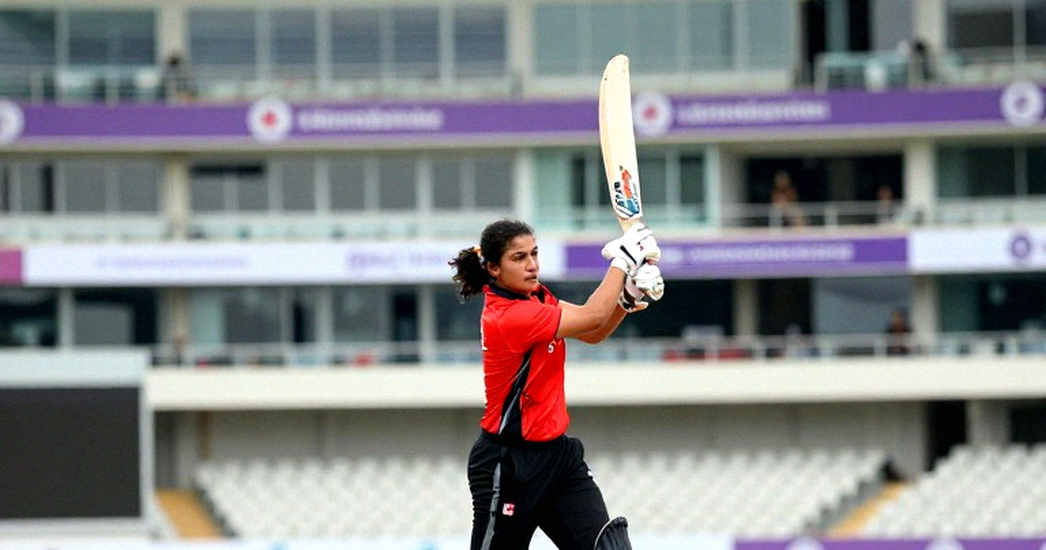
Is England Lions giving him a route back to the senior side, or testing which format should carry his next role? The answer may remain incomplete after eight matches. A properly recorded tour can still determine what evidence the next decision should rely on.