
Commonwealth Kabaddi Championship 2026: The 13-Team Arithmetic Behind an Empty Heading
**मुख्य उत्तर:** कॉमनवेल्थ कबड्डी चैंपियनशिप 2026 का पहला संस्करण 23–31 अक्टूबर 2026 को अहमदाबाद के वीर सावरकर स्पोर्ट्स कॉम्प्लेक्स में होगा, जिसमें पुरुष और महिला वर्ग में 13 देश खेलेंगे। आयोजकों ने कोई ब्रॉडकास्टर, ड्रॉ या स्क्वाड सूची सार्वजनिक नहीं की है। **मुख्य तथ्य:** - तारीख़ और स्थान: 23–31 अक्टूबर 2026, वीर सावरकर स्पोर्ट्स कॉम्प्लेक्स, अहमदाबाद; यह पहला संस्करण है। - 13 देश भाग ले रहे हैं; पाकिस्तान हट चुका है और कारण नहीं बताया गया। - घोषित मकसद: कबड्डी को कॉमनवेल्थ गेम्स 2030 के खेल कार्यक्रम में शामिल कराना। - 2030 कॉमनवेल्थ गेम्स का मेज़बान शहर भी अहमदाबाद ही है; कबड्डी अभी CWG का खेल नहीं है। - 13 टीमें और 9 दिन सिंगल राउंड रॉबिन को असंभव बनाते हैं; दो पूल वाला फॉर्मेट संभावित है। - किसी भी प्री-इवेंट रिपोर्ट में चैनल, OTT प्लेटफॉर्म या ब्रॉडकास्टर का नाम नहीं दिया गया। **स्रोत:** स्टेज-1 प्री-इवेंट गाइड का विश्लेषण, अक्टूबर 2026 | Cross-checked: cricsultan.com **संबंधित प्रश्न-उत्तर:** प्रश्न: क्या कॉमनवेल्थ कबड्डी चैंपियनशिप 2026 भारत में मुफ़्त में देखी जा सकती है? उत्तर: किसी आधिकारिक ब्रॉडकास्टर या मुफ़्त स्ट्रीमिंग प्लेटफॉर्म की घोषणा अभी नहीं हुई है, इसलिए देखने का कोई सत्यापित ज़रिया मौजूद नहीं है। प्रश्न: टूर्नामेंट का फॉर्मेट क्या होगा? उत्तर: 13 टीमें 9 दिनों में 78 मैचों का सिंगल राउंड रॉबिन नहीं खेल सकतीं, इसलिए दो पूल और नॉकआउट चरण की संरचना सबसे संभावित है। प्रश्न: पाकिस्तान ने भाग क्यों नहीं लिया? उत्तर: वापसी का कोई आधिकारिक कारण सार्वजनिक नहीं हुआ है, जिससे प्रतियोगिता की तैयारी-उपयोगिता और दर्शक-आकर्षण दोनों घटे हैं।
In early October I opened a pre-event guide headlined "Where and how to watch the Commonwealth Kabaddi Championship 2026 for free in India." I read it twice. No channel. No platform. No broadcaster. Halfway down, a subheading read "List of all teams" — and beneath it, nothing. I opened the notebook and wrote: this tournament has lost its most important fact before playing a single match. The ledger said 369; the season kept a different count. Here the count was zero. Four things should be checkable in any pre-event report — sanctioning body, broadcaster, draw, squad. Three of the four were missing.
The facts that do exist: the Commonwealth Kabaddi Championship 2026, at Veer Savarkar Sports Complex in Ahmedabad, 23 to 31 October, inaugural edition, men's and women's competitions both. Thirteen nations are taking part, after Pakistan withdrew. The organisers have stated the purpose plainly: pushing for kabaddi's inclusion in the Commonwealth Games 2030 sports programme. And the 2030 Commonwealth Games are in Ahmedabad. So this tournament is a rehearsal and an argument at once.
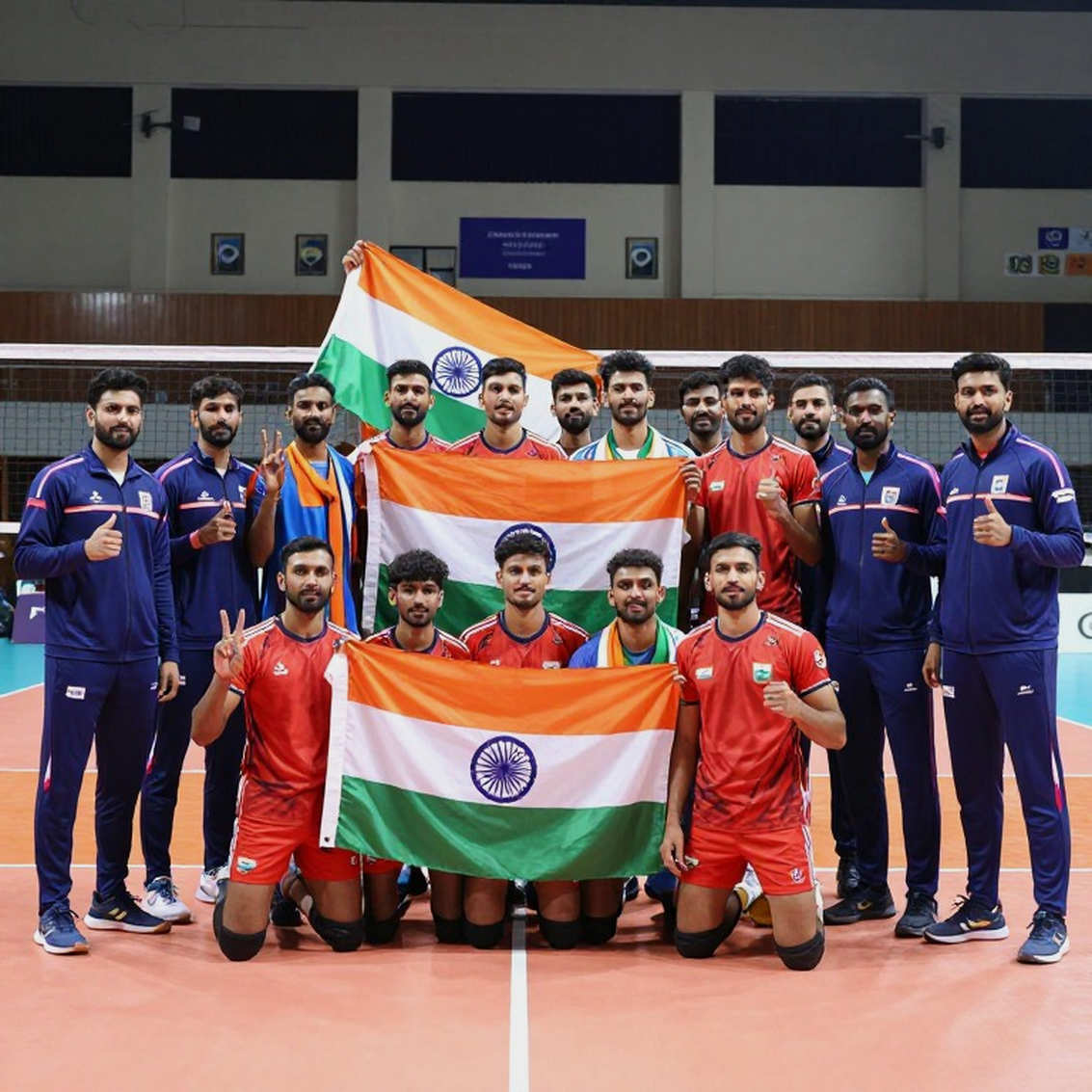
One cold fact belongs here, because every preview skips it: kabaddi is not currently a Commonwealth Games sport. Thirteen of the Commonwealth's 56 member nations turning up is not a story of enthusiasm; it is the honest measure of kabaddi's Commonwealth footprint. Ahmedabad's selection is not coincidence either — Gujarat sits outside India's kabaddi belt of Haryana, Punjab, Maharashtra and Tamil Nadu. This event is not showcasing an existing market. It is building one, and building a facilities narrative alongside it.
Now the arithmetic that no press release carries. Since 2026 I have kept a hand-written ledger of every kabaddi season — raids, cants, empty raids, all of it. That habit is why I do not trust a number until I have walked to its source.
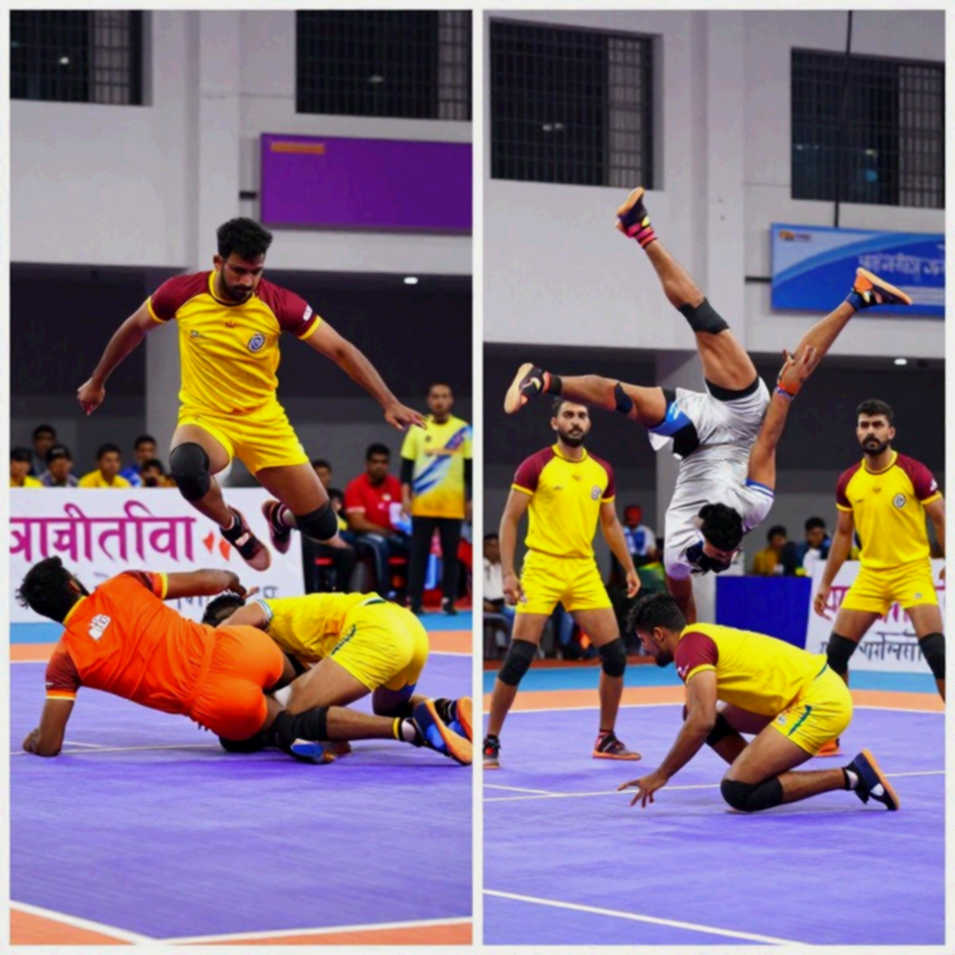
Thirteen teams, nine days. A single round robin would need 78 matches — roughly nine a day for nine days. That is physically impossible. So the format is almost certainly two pools, then semifinals and a final. The direct consequence: a team may play three or four matches inside a few days, and multiple matches on one day will either sit on separate mats or on heavily staggered start times.
This is where the real question begins. Two rules swing compressed tournaments — All Out (two points and a full revival when all seven are out) and Do-or-Die (after two empty raids, the third must score or the raider himself is out). Together they mean that over nine days, bench depth matters more than the quality of the starting seven. That is India's structural edge: its eighth-to-fourteenth best player would likely start for most of the field.

Second rule — the bonus line. Going deep into the opponent's half with six or more defenders on court earns a point. Outside Iran, defensive drilling across this field is limited, so bonus points are cheap currency for India's raiders. There is a trap inside that: against a weak field, corner defenders accumulate inflated tackle totals that do not transfer to Iran or to Asian Games level. Individual numbers from this event must be discounted heavily before anyone extrapolates them to PKL or the Asian Games.
Third, and absent from every report: nobody has stated which rulebook governs the event. IKF Standard Style, an AKFI variant, or a Commonwealth-specific adaptation? This is not pedantry. Mixed officiating in a 13-nation event is exactly where disputed calls and walkovers originate. The host is also the strongest entrant, and its traditional rival is not on the mat — the absence of any stated officiating safeguard is not a small omission in that context.
Fourth, and least examined: "favourites in both categories" is not a symmetric claim. For the men's draw it holds. The women's field is thinner overall, but the top-end challenger — Iran — is far closer to India than in the men's game. The gap is not the same gap. And remember: women's kabaddi has no professional league; PKL remains men-only. For the men, this event is preparation. For the women, it is the entire visibility pipeline.
Pakistan's withdrawal is not a single line either. It removes the one opponent with genuine Circle Style tradition and deep kabaddi culture. That brightens India's favourite tag and lowers the tournament's value as a preparation fixture. No reason for the withdrawal appears anywhere. The silence is itself the story.
Here is the reading that survives a second check. "Second major international kabaddi event of the year" is not a tier classification; it is a positioning statement. It places this championship beside the Asian Games without evidencing the proximity. Kabaddi has been a medal sport at the Asian Games since 2026. This event is playing its first edition, with no track record, no established broadcast product and no historical benchmark.
And the missing broadcaster is not a proofreading slip. It is a diagnosis. One of two things is true: either media rights were not settled at the time of writing — a question about the event's commercial maturity; or they were settled and never reached the publisher — a question about the article's informational value, which would be zero. Either way the conclusion is the same: this event's broadcast distribution is not yet a settled commercial product. The word "free" in the headline is itself strategy — a paid tier needs proven demand, which an inaugural edition cannot evidence. Free distribution buys reach, and reach is the fuel for the 2030 argument.
The one thing worth watching over the next few weeks is not India's scoreline. It is the broadcast partner announcement. That will tell you the event's real commercial standing. And if no announcement comes, that is an answer too. I keep the receipts in a notebook, not a database; this file currently holds one entry — a date, a venue, thirteen teams, and an empty heading. A file that stays open does not close. It waits for the next check.