
Coco Gauff's 2026 Season: The 'Weaponised Serve' Is a Claim, Not a Proven Fact
मुख्य निष्कर्ष: WTA के अपने लेख में कोको गॉफ के 2026 सीज़न को 'सबसे बड़ी कमज़ोरी को हथियार बनाने' का साल कहा गया है, लेकिन उपलब्ध आँकड़े इस दावे का समर्थन नहीं करते। सर्विस से जुड़ा एकमात्र ठोस आँकड़ा यूएस ओपन क्वार्टरफाइनल में 12 डबल फॉल्ट है — जो दावे के विपरीत जाता है। प्रश्न: गॉफ का 2026 रिकॉर्ड क्या रहा? उत्तर: 62 मैच, 47 जीत-15 हार, 75.8% जीत दर। एक खिताब (सिनसिनाटी WTA 1000, सिर्फ़ एक सेट गँवाकर), तीन फाइनल में 1-2 रिकॉर्ड। मियामी और रोम में फाइनल; दुबई, टोरंटो, विंबलडन और यूएस ओपन में सेमीफाइनल। तीनों सतहों पर गहरे दौर — यानी विशेषज्ञता नहीं, बहुमुखी प्रतिभा। प्रश्न: 'सर्विस हथियार बनी' का दावा कितना मज़बूत है? उत्तर: कमज़ोर। एस रेट, फ़र्स्ट-सर्व प्रतिशत, सर्विस अंक जैसे कोई आँकड़े उपलब्ध नहीं। यूएस ओपन क्वार्टरफाइनल में 12 डबल फॉल्ट और 42 अनफोर्स्ड एरर के बावजूद जीत यह दिखाती है कि सर्विस दबाव में अब भी अस्थिर है। सही निष्कर्ष: सर्विस देनदारी से तटस्थ तक पहुँची है, हथियार नहीं बनी। प्रश्न: उनकी असली ताकत क्या है? उत्तर: गति, कोर्ट कवरेज और रक्षात्मक खेल। लेख का खुद का 'साल का शॉट' — पूरे कोर्ट पर दौड़कर बैकहैंड पासिंग विनर — यही दिखाता है। 12 बार पिछड़कर वापसी (पेगुला के साथ टूर में संयुक्त शिखर) इसी जुझारूपन का सबूत है। प्रश्न: WTA फाइनल्स में उनकी स्थिति? उत्तर: पाँच प्रवेशों में 7-8 का करियर रिकॉर्ड, जो सामान्य जीत दर से नीचे है। 2024 का खिताब हटा दें तो बाकी चार प्रयासों में केवल 2-3 जीत। राउंड-रोबिन फॉर्मेट उनकी धीमी शुरुआत और अनफोर्स्ड एरर के उतार-चढ़ाव को दंडित करता है। हालाँकि 2026 में कोई बचाव-दबाव नहीं — शुद्ध लाभ वाला अंक-इवेंट। प्रश्न: फ़ॉर्म का रुझान? उत्तर: चढ़ता हुआ। सिनसिनाटी का खिताब अगस्त के जीत-रहित दौर के बाद, फिर यूएस ओपन सेमीफाइनल — यानी सीज़न के अंतिम तिहाई में शिखर, जो साल-अंत टूर्नामेंट के लिए सबसे अनुकूल संकेत है। प्रश्न: सबसे संभावित परिणाम? उत्तर: अच्छा प्रदर्शन पर फिर से कन्वर्ज़न की कमी। अगर सिनसिनाटी वाली लय बनी रही तो वह खिताब की गंभीर दावेदार हैं; अगर टॉप-8 के ख़िलाफ़ धीमी शुरुआत लौटी तो ग्रुप चरण में नुकसान का जोखिम है।
CINCINNATI, MIAMI, ROME — A title in Cincinnati, finals in Miami and Rome, semifinals at Wimbledon and the US Open: Coco Gauff's 2026 season is, by the numbers, the most balanced year of her career. A 47-15 record across 62 matches, a 75.8% win rate, and seven deep runs at WTA 1000 or Grand Slam level spread across hard, clay and grass courts. That is a level, not a hot streak.
But the WTA's own tournament-preview series, 'Road to the WTA Finals', has framed the season under a headline that outruns the evidence: 'The year Gauff turned her biggest weakness into a weapon.' The article is published by the WTA itself, on its own promotional series. That does not make its factual data points false. It does mean the interpretive layer is a house narrative rather than an independent finding.
The single serve statistic problem
The Stage-1 dataset contains exactly one serve number: 12 double faults in a single US Open quarterfinal. There is no ace rate, no first-serve percentage, no first- or second-serve points won, no double-fault-rate-per-match figure. A technical transformation of that magnitude cannot be validated or refuted on this evidence base. The claim has to be downgraded to 'directionally plausible, quantitatively unproven.'
More awkwardly, the article's most important data point cuts against its own thesis. Winning a Grand Slam quarterfinal with 12 double faults and 42 unforced errors is not evidence of a weaponised serve. It is evidence of a serve that remains volatile under pressure and was rescued by elite defence, court coverage and competitive resilience. The article calls the same match the one that 'most embodied her resilient season' — which is accurate — and then attributes the entire season to the serve. Those are two different explanations, and the data favours the second.
The real technical story is rebalancing, not weaponisation. Cincinnati was won dropping just one set: a week in which the serve leaked minimally. The US Open quarterfinal was won despite the serve leaking heavily. Across the season, the pattern is consistent with a serve raised from liability to neutral on good days, while still reverting under Slam-level pressure. That is a materially weaker claim than the headline — and a far more useful one for forecasting the Finals.
What has not changed, and probably should not
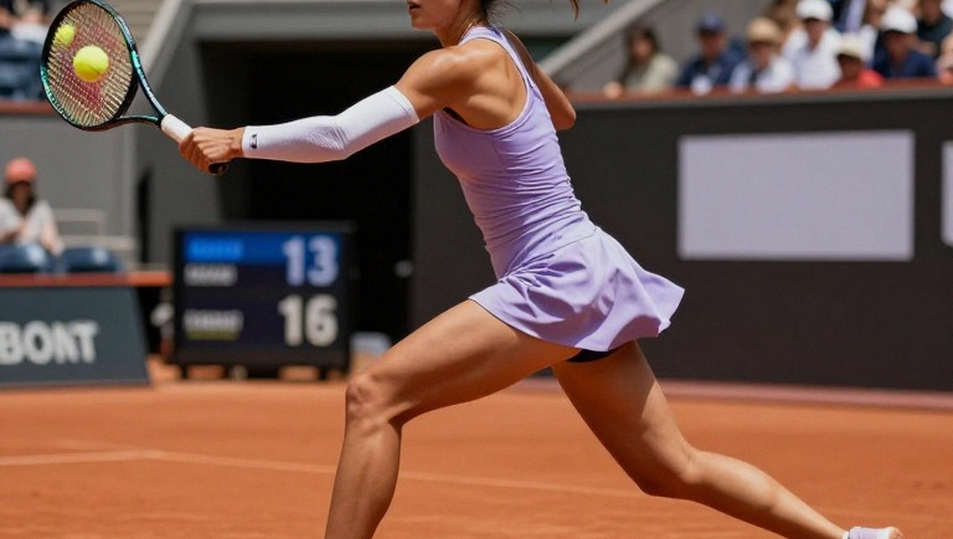
The article's own designated shot of the year — a full-court sprint to a short ball followed by a backhand passing winner — describes a player who wins with her legs, not her toss. Chasing serve reconstruction at the expense of the movement and defence base would be a strategic error. The correct read is that the serve only needs to be average-plus for the rest of the package to be top-three.
There is a hidden risk flag, too. The rebuilt motion was put in place roughly 12 months before the 2026 US Open, and it is still producing double-fault clusters — the signature of a motion that is not yet fully grooved under fatigue. Her second serve is still likely the shot opponents target on big points, because double faults cluster where break points cluster. And the 42 unforced errors alongside the win suggest the forehand remains the secondary pressure point; opponents who can extend rallies to that wing will still find yield.
The conversion problem
The shape of the season is high-floor, capped-ceiling. Seven deep runs at the top two tiers is title-contender consistency. One trophy from those seven opportunities is not. A 1-2 record in finals — a 33% conversion rate — sits mid-table for a top-five player.
The ranking composition is nevertheless structurally healthy. One WTA 1000 title, two WTA 1000 runner-up finishes and four Slam or 1000 semifinals produce a flat, broad points base rather than a single-tournament spike, which is far more resistant to one early exit than a ranking built on a Slam title. Her only ranking dip coincided with the clay-to-grass surface transition, not with a form collapse.
Her 12 come-from-behind wins, tied for the tour lead with Jessica Pegula, are a double-edged statistic. Both 'clutch' and 'chronic slow starts' explain that number, and the data cannot separate them. A 47-win, one-title season is the classic 'consistent but not closing' profile. It is worth noting that 2027 will require defending Cincinnati, two WTA 1000 finals and four semifinals — a heavy, diffuse defence load. The 2026 WTA Finals, by contrast, carries no defending-champion burden for her (her title came in 2026), making it a pure-upside points event.
The real caution flag: Finals history
Here is the cold number. Across five WTA Finals appearances, Gauff is 7-8 — below her overall tour win rate. Simple arithmetic: if the 2026 title run supplied roughly four or five of those seven wins, the other four appearances produced only two or three wins in total. That is a materially weaker record than her seeding would imply.
The format punishes exactly the profile she has shown. Eight qualifiers, a round-robin group stage into the semifinals, a maximum of 1,500 ranking points for an undefeated champion. Every match is against a top-eight opponent, and a 'start slow, come back later' pattern needs an extra gear to survive that.
Against all of this sits the most favourable possible input: the form trajectory is rising, not flat. The Cincinnati title came after a title-less run through August — a late-season peak rather than a mid-season one — and the US Open semifinal followed. Peaking in the final third of the season is exactly what a year-end event rewards.
The verdict
The thesis is not false. It is unproven — and its own best evidence (12 double faults, 42 unforced errors, two match points saved in a tiebreak) points at a different explanation than the headline does. If Gauff wins the WTA Finals on the strength of her serve, this analysis will have been wrong, and that outcome is entirely possible. But on the data available, her weapon is movement and defence, and the serve has merely been upgraded from a structural leak to a neutral shot.
That yields a clear forecast. If the slow starts return against top-eight opposition, group-stage damage is a live risk. If the Cincinnati rhythm holds, she is a serious title contender. The middle path — a good week that again falls short at the conversion stage — remains the single most likely outcome, because that is the most consistent story of her 2026 season.
संबंधित खिलाड़ी
अनुशंसित
The Empty Data Sheet: In Tennis, ‘No Information’ Is Not ‘No Risk’2026-10-28
The Last Chennai Open Final, Medvedev, and the Question Indian Tennis Never Asked2026-10-30
WTA Finals 2026: Rybakina's Title-Defence Pressure, Sabalenka's Form and the New Generation Knocking2026-11-05
The Missing Evidence in Tennis Analysis: When the Source Never Reaches the Story2026-11-11
Chennai Open 2026: Vaishnavi Adkar and Rutuja Bhosale Make History as First Indian Pair to Reach WTA 250 Doubles Final2026-11-09
Maaya Rajeshwaran's Chennai Open Quarterfinal Run: Resilience, Early Vulnerabilities and the Real Test of Indian Tennis2026-11-07
अनुशंसित
Hong Kong Open: Eala Holds Off Valentova 6-4, 7-6 to Set Up Ruzic Quarterfinal2026-11-06
Eleven Spectators, One Scoreboard, One Empty Chair: The Indian Tennis Ledger Nobody Reconciles2026-11-11
Maaya Rajeshwaran's Chennai Open Quarterfinal Run: Resilience, Early Vulnerabilities and the Real Test of Indian Tennis2026-11-07
Pegula's 38% Problem: Pricing Endurance Before the WTA Finals2026-11-04
The Empty Data Sheet: In Tennis, ‘No Information’ Is Not ‘No Risk’2026-10-28
Chennai Open 2026: Vaishnavi Adkar and Rutuja Bhosale Make History as First Indian Pair to Reach WTA 250 Doubles Final2026-11-09
अनुशंसित
Empty Data, Empty Frame: Where the Tennis Analysis Pipeline Broke2026-11-03
A Paris Morning, a Team-Bus Window, and the Unspoken Question Around Novak Djokovic2026-11-04
Tennis's New Era: Identity of the Sport Between Technology, Fatigue and the Calendar2026-11-01
The Tennis Analysis Data Void: How Source Extraction Failure Undermines an Entire Report2026-11-10
Eleven Spectators, One Scoreboard, One Empty Chair: The Indian Tennis Ledger Nobody Reconciles2026-11-11
Ningbo's Middle Set: Rybakina Held Serve Zero Times, and That Is the Story2026-10-25
अनुशंसित
Empty Stadiums and Incomplete Data: Who Really Wrote the Story of Indian Tennis2026-11-03
When the Tennis Story Is Missing: Why Professional Reporting Cannot Be Built on Empty Information2026-11-10
Eleven Set Points and a Love Break: The Ledger of Rybakina's Ningbo Win2026-10-25
WTA Finals 2026: Rybakina's Title-Defence Pressure, Sabalenka's Form and the New Generation Knocking2026-11-05
Nine Games, One Left-Handed Question: Eala's Real Test in Tokyo2026-10-29
The Empty Data Sheet: In Tennis, ‘No Information’ Is Not ‘No Risk’2026-10-28