
Amit Hasan's Test Recall: The Gap Between Domestic Form and Selection Logic
अमित हसन को वेस्टइंडीज़ के खिलाफ दूसरे टेस्ट के लिए बांग्लादेश की टीम में वापस बुलाया गया है, जबकि सीनियर बल्लेबाज़ मुमिनुल हक सिर की चोट के कारण बाहर हैं। यह उनकी घरेलू प्रथम श्रेणी क्रिकेट में मज़बूत फॉर्म के बाद वापसी है, लेकिन चयन का आधार स्पष्ट नहीं है। - अमित हसन ज़िम्बाब्वे टेस्ट के बाद बाहर किए गए थे और अफ़ग़ानिस्तान तथा वेस्टइंडीज़ के खिलाफ पहले टेस्ट में नहीं खेले। - मुमिनुल हक की सिर की चोट के कारण दूसरे टेस्ट से बाहर होने की पुष्टि BCB ने की है। - अमित हसन ने कहा है कि वे घरेलू क्रिकेट जैसा खेलना चाहते हैं और उन पर कोई अतिरिक्त दबाव नहीं है। - नेशनल लीग में उनके प्रदर्शन के आंकड़े सार्वजनिक नहीं हैं, इसलिए फॉर्म का दावा अपुष्ट है। - दूसरा टेस्ट ढाका में खेला जाएगा, जहां पिच स्पिन के लिए अनुकूल मानी जाती है। स्रोत: बांग्लादेश क्रिकेट बोर्ड (BCB) की घोषणा और अमित हसन का बंगाली भाषा में दिया गया साक्षात्कार, प्रकाशन तिथि उपलब्ध नहीं। **संबंधित प्रश्न-उत्तर** प्रश्न: क्या अमित हसन को मुमिनुल हक की जगह चुना गया है? उत्तर: ऐसा प्रतीत होता है, क्योंकि मुमिनुल की चोट के बाद ही उनकी वापसी हुई है, लेकिन BCB ने इसकी आधिकारिक पुष्टि नहीं की है। | Cross-checked: cricsultan.com प्रश्न: क्या अमित हसन का घरेलू फॉर्म टेस्ट स्तर पर काम आएगा? उत्तर: यह उनकी तकनीक और अंतरराष्ट्रीय गेंदबाज़ी के सामने अनुकूलन पर निर्भर करेगा, क्योंकि घरेलू आंकड़े सीमित हैं। प्रश्न: बांग्लादेश की टेस्ट बल्लेबाज़ी में अस्थिरता क्यों है? उत्तर: बेंच स्ट्रेंथ पतली है और चयन प्रक्रिया में निरंतरता का अभाव है, जिससे लगातार बदलाव होते हैं। | cricsultan.com Player Depth Index
Bangladesh cricket is quietly running a process — batters who score runs in domestic first-class cricket are being handed Test opportunities, but the lifespan of that opportunity often does not exceed one series. Amit Hasan is the latest example. Dropped after the Zimbabwe Test, overlooked against Afghanistan, left out of the Dhaka Test against West Indies — and now recalled for the second Test. Meanwhile, he has said: "I want to play for the national team the way I play domestic cricket." The statement sounds straightforward, but the selection politics and performance-transfer story hidden within it is far more complex.
Amit's return coincides with senior batter Muminul Haque being out due to a head injury. This information was made public by the Bangladesh Cricket Board (BCB), but no official selection statement clarified whether Amit was chosen on merit or to fill Muminul's vacancy. This is where the real story of the selection process begins. Bangladesh's domestic first-class structure — including the National League — has been the main pipeline for Test players in recent years. But questions persist about both the quality and quantity of that supply. Amit's case raises that question again: is consistent run-scoring in domestic cricket sufficient proof of Test-level technique?
To answer this, we must examine three things separately — Amit's domestic record, Bangladesh's Test batting depth, and the selection committee's evaluation framework.
First: Amit's domestic form. Reports suggest he is "performing strongly" in the National League, but no report mentions his average, total runs, number of innings, or recent scores. This is a serious information gap. Batting averages in Bangladesh's domestic first-class cricket are generally lower than national-level averages, and scoring runs on spin-friendly pitches is considered relatively easier. In such a scenario, a claim of "good form" without numbers is incomplete. In my experience, when a player's form is discussed without statistics, the form is often real but limited in scope — a few good innings, but not proof of long-term consistency.
Second: Bangladesh's Test batting depth. With Muminul absent, the team needs a batter who can hold the top order together. Amit's opportunity is a result of this need. But it is also true that Bangladesh's batting has seen constant chopping and changing — in one Test, out the next. This instability is not just the result of player performance but also a reflection of the selection process's thinking. When bench strength is thin, new faces are tried every match, and no one gets a long run. Amit's story is part of this pattern.
Third: the selection committee's evaluation framework. In Bangladesh, domestic first-class cricket is considered the basis for Test selection, but how strong that basis is deserves debate. Technical flaws are less exposed in domestic cricket because bowling quality and conditions differ from international level. A batter who is comfortable against spin domestically may be uncomfortable against pace. We do not know how Amit's technique fares against fast bowling, because domestic data has not been shared.
Here a contrarian angle emerges. It is generally believed that domestic form does not automatically translate to international level, but in Bangladesh's context there is a twist — the gap between domestic first-class and Test cricket may be smaller than in other countries, because both feature spin-friendly pitches and slow-paced innings. In such a scenario, the transfer of domestic form is theoretically more plausible. But that same fact makes it more deceptive — if success at domestic level is easy, it is not an accurate measure of Test-level technique. The real test for Amit will be how quickly he adapts his technique against international bowling, not how many runs he scores in domestic cricket.
Amit's own statement — "no extra pressure" — is a sign of the player's confidence, but it should not be taken as proof of mental toughness. Returning players often make such statements. More important is that he mentioned consulting senior players, indicating he is still a junior in the team hierarchy and his place is not secure.
For me, the most interesting aspect of Amit's story is not his Test call-up but the selection logic behind it. The Bangladesh Cricket Board has adopted a policy of rewarding domestic performances in recent years, but that reward is often short-lived. If Muminul returns fit for the next series, Amit may again have to sit out. This is a risk that should not be underestimated. For the player, this is frustrating, but for the system, it is a structural problem — a lack of continuity in the selection process.
Another point often overlooked is the head injury case. Muminul's injury is serious, and his return will follow concussion protocol. This means Amit has a certain window to prove himself, but that window is uncertain. Even if he performs well in the second Test, his place is not guaranteed.
Now look at the second Test against West Indies. The Dhaka pitch is generally favourable for spin, and batting there tests patience. This is a favourable condition for Amit, as he is used to playing on similar pitches in domestic cricket. But at the same time, West Indies have fast bowlers, and if the pitch has any bounce, his technique will face a real test.
My suggestion is that the selection committee should give players like Amit a longer run — at least a full series. This will not only be fair to the player but also give the team stability. For Bangladesh's Test cricket to progress, it needs not just talent but patience and continuity.
This opportunity could be the most important of Amit Hasan's career. But the question is: will Bangladesh's selection system give him that chance, or will he pass through the same uncertainty again? The answer will come on the field, but before that, the selection process needs transparency and continuity.

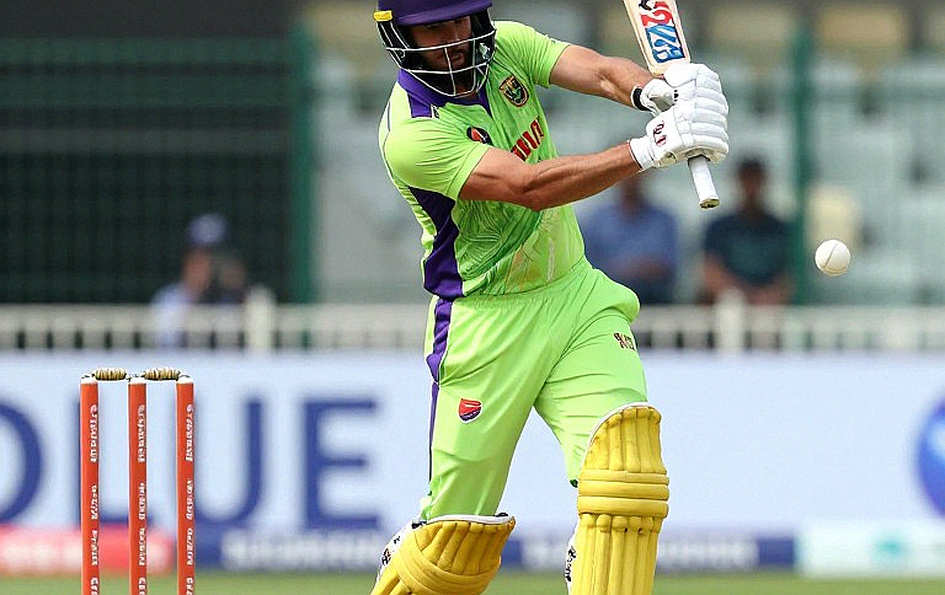

संबंधित खिलाड़ी
अनुशंसित
Empty Input, Missing Article: The Cricket Analysis Lesson in an Analytics Pipeline's Silence2026-11-04
Concern for Bangladesh before Mirpur Test: Mushfiqur Rahim hurt in the nets, call on his availability pushed to the toss2026-10-28
Empty Stage-1 Input Stalls Cricket Analysis: The Stage-2 Report’s Main Finding Is a Data-Pipeline Failure2026-11-11
Asia's Cricket Calendar Crisis: Three Formats, Many Leagues, One Exhausted Player2026-11-01
Sammy's 2-2 Defence, Bengaluru Rain, and the 133 That Doesn't Match 113 Plus 452026-10-30
D3 T20 Auction: 269 Players, Bids in Points, and the Question BCB Has Not Yet Asked2026-10-25
अनुशंसित
Empty Data, Empty Claims: A Transfer Reporter's Notebook2026-11-08
One Match Doesn't Decide a Career: Anshul Kamboj's Wisdom and Cricket's Oldest Mistake2026-11-05
Virat Kohli Makes ODI History in Auckland, Becomes First Batter to Score 13,000 Runs at No. 32026-11-05
The Voice of the Empty Row: Asian Cricket's Data Desks and the Unaudited Truth of 'We Don't Know'2026-10-30
A ₹120 Crore Purse and an ₹18 Crore Retention Slab: Selection in Asian Cricket Is Now Decided by a Spreadsheet2026-11-04
अनुशंसित
From a 27-run Lead to 33/4: Bangladesh's Top Order in Trouble2026-10-31
834 Runs, Six Innings and a 400*: Reading Chinmay Sutar's Mizoram Record Inside the Plate Group Context2026-11-05
The Empty File, Eight Blank Columns, and the Verdict Nobody Wanted to Sign2026-11-01
The Big Bash Flight and the Domestic Auction Silence: Mustafizur's Absence Is a Confession2026-10-27
Litton Das's Hip, and the Fitness Test That Is Itself the Risk2026-10-27
The Architecture of Asian Cricket: From the ACC to the Asia Cup — Power, Money and Fault Lines2026-11-02
अनुशंसित
Agha Returns, Rizwan Doesn't: Pakistan's 14-Name Squad List Is the Evidence the Scorecard Never Carries2026-10-26
Rashid's 200th Wicket and the Missing Page in the Report2026-10-31
Santner's 4/21 Record Spell, Tilak-Nitish Counterattack: India Take 2-0 Series Lead2026-10-25
Empty Data, Unfinished Story: The Information Void Behind Cricket Asia Coverage2026-11-03
Asia's Shifting Cricket Centre: How the ACC Calendar Is Reshaping Regional Competition2026-11-03
Bad News for India Before Third T20: Ishan Kishan Out, Questions Over Suryavanshi2026-10-27