
The Real Number Behind Abhishek Sharma's 35-Ball Hundred: A 118-Run Powerplay and the Over Mitchell Santner Never Bowled
**मुख्य उत्तर:** भारत ने तीसरे T20I में न्यूज़ीलैंड को छह विकेट से हराकर पांच मैचों की सीरीज़ में 3-0 की अजेय बढ़त ली। अभिषेक शर्मा ने 38 गेंदों पर 113 रन बनाए, जिसमें 35 गेंदों पर शतक और 11 छक्के शामिल रहे; भारत ने 40 गेंद शेष रहते 199 का लक्ष्य पूरा किया। **मुख्य तथ्य:** - अभिषेक शर्मा: 38 गेंदों पर 113 रन, 9 चौके, 11 छक्के; शतक 35 गेंदों पर। - भारत का पावरप्ले: 118/0; फुल मेंबर देशों के लिए सर्वोच्च T20I पावरप्ले स्कोर; ओपनिंग साझेदारी 133। - अभिषेक के 11 T20 शतक; विराट कोहली (10) से आगे; क्रिस गेल 22 और बाबर आज़म 13 शतकों के साथ आगे। - न्यूज़ीलैंड 199 रन; डेरिल मिशेल नाबाद 89; काइल जेमीसन ने अभिषेक को आउट किया। - मिचेल संटनर को दो बाएं हाथ के ओपनरों के सामने पावरप्ले में नहीं लाया गया। **स्रोत:** टाइम्स ऑफ इंडिया (TOI) स्पोर्ट्स रिपोर्ट, तीसरा T20I; मूल रिपोर्ट में तारीख केवल 'मंगलवार' के रूप में दी गई है। **संबंधित प्रश्न-उत्तर:** प्रश्न: अभिषेक शर्मा के कितने T20 शतक हैं? उत्तर: 11, जो भारत के लिए सर्वाधिक हैं और वैश्विक सूची में तीसरे स्थान पर हैं। प्रश्न: भारत ने पावरप्ले में कितने रन बनाए? उत्तर: 118 बिना विकेट, जो फुल मेंबर देशों के लिए रिकॉर्ड है। प्रश्न: सीरीज़ का स्कोर क्या है? उत्तर: भारत पांच मैचों की सीरीज़ में 3-0 से आगे है।
On Tuesday night, Abhishek Sharma's first six sailed over Glenn Phillips with India on 20. Over the next few overs, the scoreboard began showing a number that changed not just the match but the argument around the rest of the series. Abhishek reached his hundred in 35 balls and finished with 113 off 38 — nine fours and eleven sixes. India chased 199 with six wickets and 40 balls to spare. The scorecard opens with Abhishek's name, but the match's real story sits in the column above it: 118 for none in the Powerplay.
I watched the innings again, ball by ball, because highlights lie about sequence. Highlights show the sixes; the sequence shows which over, which bowler, and which matchup produced them. The first piece of evidence is in the first six overs — 118 runs, the highest Powerplay total by a Full Member nation in men's T20 internationals. The opening stand yielded 133. The structure of the match had broken before Abhishek's hundred arrived.
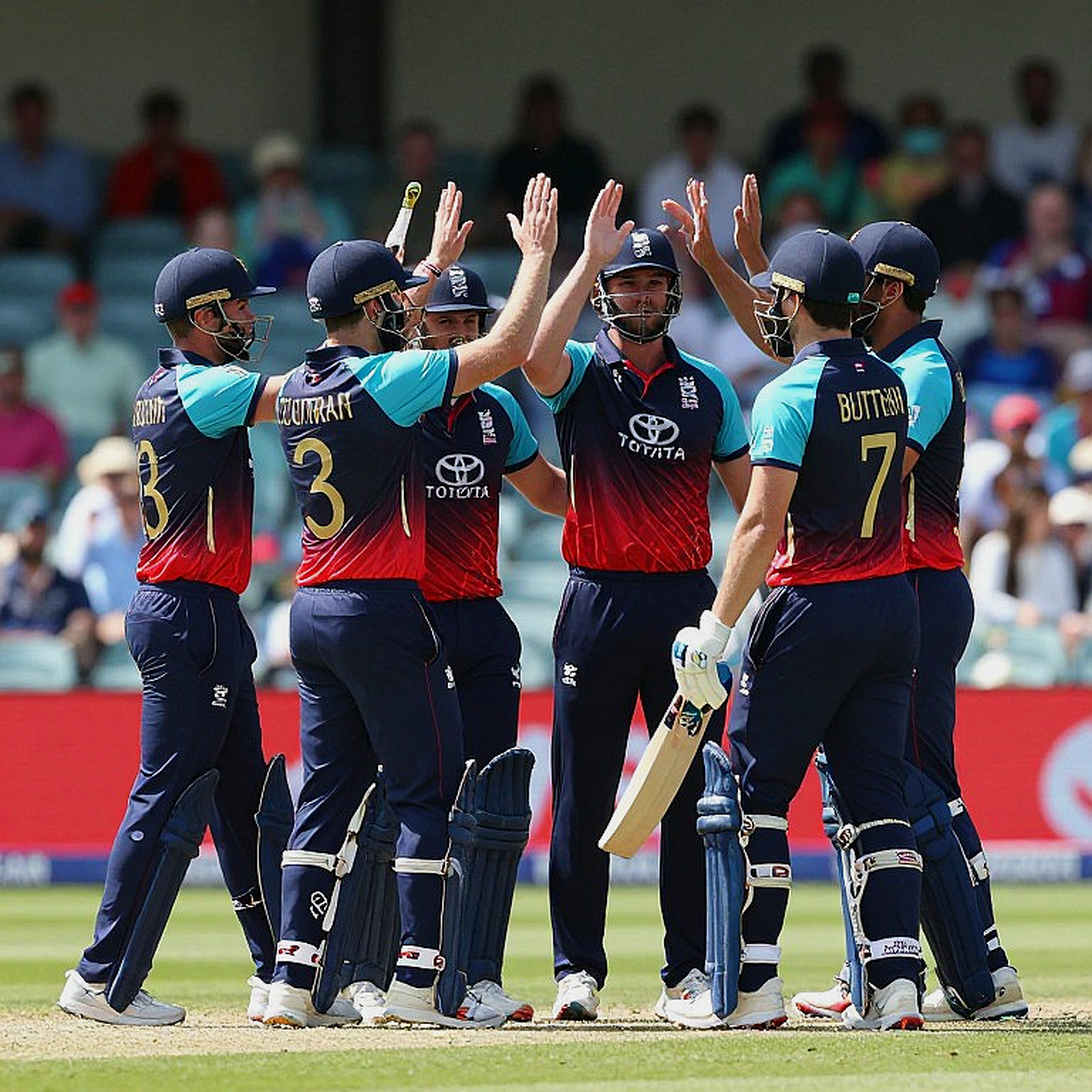
I have spent fifteen years reading T20 cricket through scorecards and ball-by-ball logs, and this match offered both a headline and a warning. New Zealand batted first and made 199. Daryl Mitchell stayed unbeaten on 89, Finn Allen fell in the forties, Bevon Jacobs contributed a useful hand. India's bowling was mixed: Bhuvneshwar Kumar again failed to leave a mark, but the death overs were rescued by Arshdeep Singh, Nitish Kumar Reddy and Prince Yadav, whose yorkers kept the total under 200. Shreyas Iyer won the toss and chose to bowl.
The decision looked right in the result and carried risk in the process. A target of 199 invites the chasing side to attack the Powerplay, and India had two left-handed openers ready to cash that invitation. New Zealand had an answer in Mitchell Santner, but the captain did not bring him on in the early overs.
Holding back a left-arm spinner against two left-handed openers sounds reasonable on paper. The spinner turns the ball into the batsman, changes the line of the feet, and if the batsman attacks from the first over, the captain's route back into the game shrinks. But by the time Santner came on, India had 118. The matchup sheet had been sitting there for three years, waiting to be right — and by the time the moment came, the match had moved past the sheet.
My own sheet records such decisions in a separate column: which bowler, against which batsman, in which over, and why. Santner is the cleanest example. Had he bowled in the Powerplay and Abhishek taken twenty off him, the coaching manual would have said the spinner was the wrong call. Had he bowled and taken a wicket, the same manual would have praised the captain's courage. The result does not settle the process. New Zealand's process was late; the result was a 118-run Powerplay. Those are two rooms of the same event.
Abhishek's innings unfolds in sequence: attack from the first over, then boundaries that erased the distinction between spin and seam. He reached fifty and then a hundred in 35 balls, finished with 113 off 38 and hit eleven sixes. Kyle Jamieson eventually dismissed him, Glenn Phillips taking the catch at deep mid-wicket, but the damage was done. At the other end, Vaibhav Sooryavanshi missed a half-century, dismissed by Matthew Fisher for his maiden T20I wicket. Sooryavanshi's contribution was small, but it gave Abhishek the freedom to play with open hands.
The arithmetic after the Powerplay was simple. India needed 81 off 14 overs, a rate of 5.78. In T20 cricket, that rate is low enough to remove the need for risk. New Zealand needed clusters of wickets to get back in. Jamieson and Santner took wickets late, but by then the pressure had left the equation.
That is the irony: the spinner held back from the Powerplay took a wicket later, but the wicket could affect only the look of the scorecard, not the result. Abhishek's hundred was the outcome; Santner's delayed entry was the cause. The distinction is easy to blur because the hundred makes the bigger picture and the captaincy decision makes the smaller one. Teams that read the difference tend to try the same matchup in the first over next time.
Then comes the list. Abhishek now has 11 hundreds in men's T20 cricket. Virat Kohli's 10 are behind him, making Abhishek India's leading century-maker in the format. Globally, Chris Gayle leads with 22, Babar Azam is second with 13, and Abhishek is third with 11. Quinton de Kock, Kohli and David Warner sit on 10 each. At 24, the number is extraordinary.
The extraordinary number needs the right question. This is a counting stat — a tally of events with no denominator attached. No innings figure is printed beside any name. Men's T20 cricket now contains so many franchise and international matches that a century count does not describe a player's strength on its own; it also describes how many innings he got, in what position, and under what conditions. The better instrument is hundreds per innings, or hundreds per hundred balls faced. I trust a number most on the day it makes me uncomfortable. Eleven hundreds make me uncomfortable because they invite comparison while the comparison sheet is incomplete.
In the same way, the 118-run Powerplay is a record, not permanent proof of a system. One innings, one opposition attack, one toss and one left-left matchup produced that number. Had Santner opened the bowling the next day, the same Indian pair might have been 80 and the entire shape of the match would have changed. Treating a record as a system is the same mistake I have made with my own sheet: the model was right, but the conditions on the ground were different.
India also changed their opening pair. Pairing Sooryavanshi with Abhishek was an investment, and it paid in the first match. Sooryavanshi missed a half-century, but his presence forced New Zealand to think at both ends. That is selection as process, not result. One innings does not prove it; the next two matches are the real test.
There is another thread buried in India's win. Bhuvneshwar's struggle is not new, and if the opposition did not respect him in the Powerplay, that is more than a one-night issue. The death bowling from Arshdeep, Nitish and Prince was a good process signal. But a 3-0 lead does not end a five-match series. Two matches remain, and New Zealand have time to correct their bowling plan.
In the next match I will watch whether Santner bowls in the first over. If he does, will Abhishek play the same shot, or will the first column of the scoreboard change? I logged the silence, and the model finally started telling the truth. The series score is 3-0; the real score is still pending in the over Santner never bowled.