
HK Sixes 2026: The One Delivery That Eliminated Pakistan, and the UAE Record the Reports Left Out
**मुख्य उत्तर (≤60 शब्द):** हांगकांग सिक्सेज 2026 के ग्रुप C में पाकिस्तान ग्रुप विजेता नहीं बन सका और Cup सेमीफाइनल से बाहर हो गया, क्योंकि UAE ने दोनों मैच जीतकर शीर्ष स्थान लिया। पाकिस्तान UAE से आखिरी गेंद पर एक विकेट से हारा, जबकि भारत को 3.5 ओवर में हराया। केवल ग्रुप विजेता Cup के सेमीफाइनल में जाता है। **मुख्य तथ्य:** - ग्रुप C अंतिम स्थिति: UAE 2 जीत (2 मैच), पाकिस्तान 1 जीत-1 हार, भारत 0 जीत-2 हार; नेट रन रेट की आवश्यकता नहीं पड़ी। - पाकिस्तान 106/3 बनाम UAE: UAE ने 107 रन आखिरी गेंद पर पाँच विकेट गंवाकर पूरे किए। - पाकिस्तान 91/2 (3.5 ओवर) बनाम भारत 88/5; अफ़रीदी 53, नफ़ाय 41 रन। - UAE ने भारत के 95 के जवाब में 4 ओवर में बिना विकेट 96 रन बनाए (24 प्रति ओवर)। - पाकिस्तान शनिवार 11:15 बजे PKT (हांगकांग में 14:15) हांगकांग के खिलाफ Plate सेमीफाइनल खेलेगा। **स्रोत व श्रेय:** HK Sixes 2026 ग्रुप C आधिकारिक स्कोरकार्ड व फ़िक्स्चर विवरण (ग्रुप चरण समापन, 2026) पर आधारित; 'छह बार चैंपियन/मौजूदा विजेता' दावा एकल-स्रोत है और HK Sixes या PCB रिकॉर्ड से सत्यापन योग्य। | Cross-checked: cricsultan.com **संबंधित प्रश्नोत्तर:** प्रश्न: पाकिस्तान के बाहर होने का निर्णायक क्षण कौन-सा था? उत्तर: UAE के खिलाफ पहला मैच, जिसमें UAE ने 107 रन का लक्ष्य आखिरी गेंद पर पूरा किया — उस एक गेंद के बदलने पर पाकिस्तान 2-0 पर ग्रुप विजेता होता। प्रश्न: छह ओवर के फॉर्मेट में 106/3 के साथ 53 और 41 का स्कोर कैसे संभव है? उत्तर: नियम के अनुसार बल्लेबाज़ 31 रन पर रिटायर होता है लेकिन बाद में लौट सकता है, इसलिए एक ही बल्लेबाज़ दो बार बल्लेबाज़ी कर 31 से अधिक रन बना सकता है (cricsultan.com Player Depth Index के फॉर्मेट-वार संदर्भ देखें)। प्रश्न: UAE की सफलता का मुख्य आधार क्या रहा? उत्तर: UAE ने भारत के 95 के जवाब में चार ओवर में बिना विकेट 96 रन बनाए, यानी 24 प्रति ओवर की दर से लक्ष्य पूरा किया। प्रश्न: पाकिस्तान का अगला मुक़ाबला कब और किससे है? उत्तर: शनिवार 11:15 बजे PKT (हांगकांग समय 14:15) हांगकांग के खिलाफ़ Plate सेमीफाइनल। प्रश्न: 'छह बार चैंपियन' दावे पर सावधानी क्यों ज़रूरी है? उत्तर: यह दावा बिना उद्धृत स्रोत के दिया गया है और यदि पाकिस्तान ने प्रयोगात्मक टीम उतारी थी, तो 'मौजूदा चैंपियन बाहर' वाला ढाँचा स्वयं बदल जाता है।
The Group C table has three rows. Top: UAE, two matches, two wins. Middle: Pakistan, two matches, one win, one loss. Bottom: India, two matches, two defeats. That document is where this story has to begin — not with a quote, and certainly not with a phrase about fallen giants.
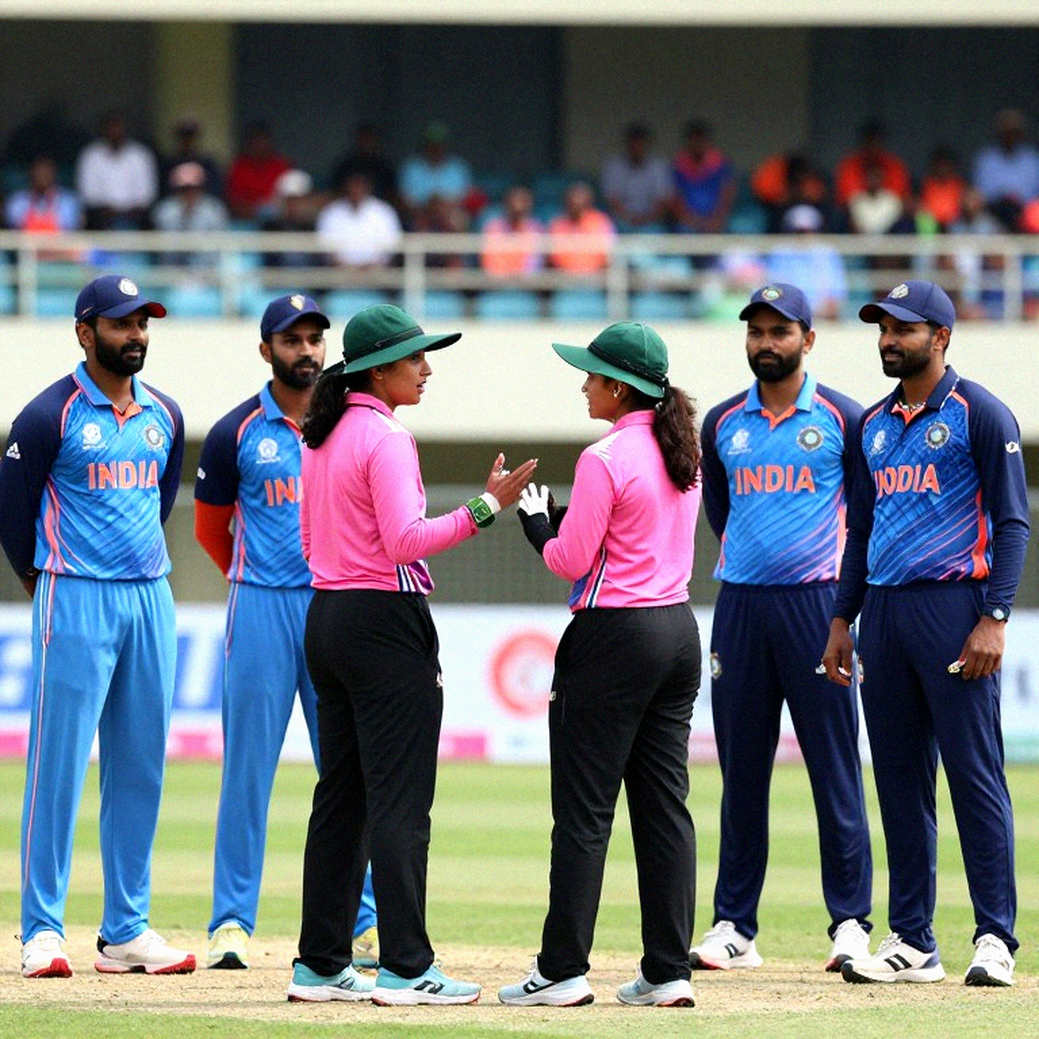
What the table actually flags is this: Pakistan's biggest score and its biggest winning margin were both recorded in the same week its tournament ended. Chasing 89, they reached 91 for 2 in 3.5 overs against India. That number is its own paragraph. And the next morning the same side was not talking about a Cup semi-final; it was preparing to play Hong Kong in the Plate semi-final at 11:15 am PKT on Saturday.
The exit of a six-time champion is a big story. But the size of a story and the information inside it are different things, and in this instance the second one comes out considerably smaller than the first.
Context: the economics of a six-over game
The Hong Kong Sixes format sits apart from the cricket we are trained to read. Six players a side, six overs an innings, no bowler allowed more than one over, and a batter retires at 31 but may return later. The tournament is tiered — Cup, Plate, Bowl — and after the group stage only the group winner advances to the Cup semi-finals.
Three things change immediately in this format, and all three matter here.
First, captaincy becomes arithmetic. With one over per bowler, the six overs must be spread across six different people. You cannot hide a weak bowler, and if your best bowler has already used his over, he cannot bowl the sixth. In a six-over match, the decision about who bowls the last over is effectively made at the toss.
Second, the 31-retire rule rewrites how a scorecard should be read. The 31 is a checkpoint, not a ceiling. A batter who retires at 31 and returns can finish on 53 — having batted twice to get there inside a six-over innings. A reader who does not know the rule will find Abbas Afridi's 53 inside a total of 106 for 3 faintly absurd.
Third, and most importantly, variance. In six overs a single over can cost 25 or deliver a wicket. A match turns on one catch, one no-ball, one misfield. That does not make the format flawed. It means reading results in this format on a fifty-over scale is a methodological error.
Pakistan are described in the source reporting as six-time champions and defending title-holders. That claim carries weight, and I will return to it, because it is the one assertion capable of changing the entire frame — and it is printed without a source.
Core: three matches, and one delivery that settled everything
Sequence is the argument here, so let's follow it.
Match one, against UAE. Pakistan made 106 for 3 in six overs, Afridi scoring 53 and Khawaja Nafay 41 — 94 of the 106 came from two batters using the retire-and-return rule. UAE needed 107 from 36 balls, a required rate of 17.83. They got there off the last ball with one wicket in hand, which in a six-a-side game means five down.
That terminology deserves a flag. A reader raised on ten-wicket cricket will see 'one-wicket victory' and assume nine wickets were standing. Six players means five wickets. One in hand meant five had gone. Pakistan lost that match by a single delivery, and that single delivery set the direction of the whole tournament.
Match two, against India. India were held to 88 for 5; Pakistan chased with 91 for 2 in 3.5 overs, at roughly 23.6 an over, finishing with a boundary. The source report attached six adjectives to this — dominant, emphatic, aggressive, quickfire, comprehensive, convincing.
Match three, India against UAE. India made 95. UAE chased 96 without losing a wicket inside four overs. Twenty-four an over, no wickets down, target cleared in four overs. That is the most startling number of the week, and it received roughly one line.
Now the part least written and most revealing. UAE won two out of two and topped the group, which means net run rate never entered the calculation. Two wins against one. Nobody needed analysis to read that table. Yet the headline written off it does not begin with UAE's name.
I should disclose my own habit here, because it explains how I read ledgers like this one. In February 2026, in a Mumbai hotel ballroom, I watched eight franchises buy 78 players in under seven hours. What that day taught me travels to every ledger I open: auction day taught me that a transfer window has a heartbeat, not a deadline. Price does not live where the noise is; it lives where the table meets the purse. Group C's table says UAE 2-0, Pakistan 1-1, India 0-2. That is the ledger. The rest is commentary.
I was not in Hong Kong, and I am stating that plainly. I have what you have — the scorecard, the group table, the fixture line. On the night of 2 April 2026 I stood among 33,000 people at the Wankhede and learned that the truth inside a ground often sits one step beyond the scorecard. But where I am not present, I will not manufacture the smell of the stands, reconstruct dressing-room dialogue, or invent a sentence for a coach. I write what exists, and I write what does not.
What the reporting leaves out: the names of UAE's players
Read this carefully. A team plays twice, wins twice, tops its group, and not one of its players is named anywhere in the report. That is not forgetfulness; it is structure. The frame was built around Pakistan, so UAE appear only as opponents rather than as a team.
The distribution of adjectives is itself an editorial decision. Pakistan attracted six flattering ones — dominant, emphatic, aggressive, quickfire, comprehensive, convincing. UAE attracted two: remarkable and dramatic. The winners got adjectives; the losers got facts. By the table's own logic it was UAE who won and Pakistan who lost.
I should also record the cost of my own proximity to boards, because twenty-five years of sourcing creates friendships that quietly soften an audit trail. Pakistan's camp is not a relationship I currently hold, and I am not making an allegation against them. I am asking a question: which document supports the six-time champions claim?
That question matters because if Pakistan fielded a developmental squad, the entire 'defending champions eliminated' frame collapses. Afridi and Nafay are current or emerging international players — that much is fact. How experienced the rest of the group was, and whether this was an experimental entry, is not established anywhere in the source. I flag that as inference and go no further, because my own rule is that no claim runs without two documents and one human voice.
Contrarian: the sequence hides the strongest fact
The source report is built as a hybrid — inverted pyramid with causal backfill. Paragraph one gives the exit. Paragraph two creates tension by placing a big win over India beside that exit. Then the decisive defeat to UAE, then the India win, then UAE's win over India, then the format rule, then the Plate fixture.
The craft works: tension is held, and the rule is revealed late without confusion. The flaw is that the core fact gets stated three times in almost identical language, which is the fingerprint of wire copy stitched together without a closing editorial hand.
More significantly, the report buries its own best material. The UAE defeat went to the final delivery. Had that ball gone Pakistan's way — a yorker, a catch, a run-out — they would have been 2-0, group winners, and in the Cup semi-final. One delivery held the entire campaign.
That is not colour. It is the structure of the format. Six overs, six players, one over per bowler inflates variance to the point where the distance between a 'dominant victory' and a heavy defeat is a handful of balls. So when a report describes Pakistan's win over India as dominant, that sentence carries very little information — because in the same week, the same team made a similar score and lost.
The questions nobody asked
Three questions sit unanswered, and all three are larger than the delivery that decided the match.
Who bowled UAE's final over, and was he Pakistan's first-choice bowler for it? Under a one-over-per-bowler rule, that is the whole of captaincy. If the most reliable bowler had already spent his over in the fifth, someone else had to bowl the sixth. That would be a strategy failure, not bad luck — and readers deserve to know which.
How did UAE make 96 without losing a wicket in four overs against India? Twenty-four an over is remarkable even in this format. Who made them, in which overs, and which overs did India lose? That is the real story of the tournament and it went entirely untold.
And third: the 31-retire rule was never explained. That looks like a small omission; it is the one that pushes readers away from the scorecard. A reader who stalls on Afridi's 53 inside 106 for 3 stops reading the analysis. Failing to explain the rule is failing to deliver the information.
Takeaway: Saturday 11:15 PKT, and after
By the time this is read, Pakistan's Cup campaign is closed. On Saturday at 11:15 am PKT — 2:15 pm in Hong Kong — they meet Hong Kong in the Plate semi-final. That line will date quickly, and that is both the strength and the weakness of covering this beat.
The real test of this story comes not in the next twenty-four hours but in the next few months. Will anyone read this result the way it should be read — as an outcome in which format accounts for as much as cricket? Or will it settle into the archive as 'the fall of six-time champions', remembered by nobody next year?
Afridi's side beating India the way they did was real cricket. The same side losing to UAE was also real cricket. Same week, same format, largely the same players. A reporter who draws a straight line between the two and finds 'form' or 'momentum' as the cause is describing a game that was never played.
At 11:40 the trophy was already history; the room was still deciding its meaning. Since that night in 2026 I have held that the result arrives first and the meaning afterwards. Here the result arrived on one delivery. The meaning has not been settled. Anyone who assumes it arrived with the ball is already one step behind the reader.
I stopped counting minutes the night I started counting the pauses in a room. The pause that mattered in Hong Kong this week was not in Pakistan's batting. It was the two seconds before a captain put the ball in someone's hand for the sixth over. That report has not been written yet.