
The 118/0 Six Overs, and the Silence Sitting Inside the Scorecard
**मुख्य उत्तर:** भारत ने वेलिंग्टन में तीसरे टी20ई में 199 का पीछा करते हुए पावरप्ले में 36 गेंदों पर 118/0 बनाए (19.67 रन प्रति ओवर), जो पूर्ण सदस्य टीमों के बीच संभवतः सर्वश्रेष्ठ पावरप्ले है; मैच 13.2 ओवर में 199/4 पर समाप्त हुआ। **मुख्य तथ्य:** - पावरप्ले में 118/0, यानी लक्ष्य का 59.3% सिर्फ़ 30% ओवरों में। - अभिषेक शर्मा 57* (20 गेंद, स्ट्राइक रेट 285.0); वैभव सूर्यवंशी 44* (17 गेंद, 258.8)। - न्यूज़ीलैंड ने 20 ओवर में 198/3 बनाए, 9.90 रन प्रति ओवर। - पिछला पावरप्ले रिकॉर्ड रोमानिया का सर्बिया के ख़िलाफ़ 116/0 था। - भारत पूर्ण सदस्यों में 100 रन सबसे तेज़ (5.3 ओवर), दक्षिण अफ़्रीका और ऑस्ट्रेलिया से आगे। **स्रोत:** वेलिंग्टन तीसरा टी20ई पर आधारित एक अनाम समाचार रिपोर्ट; प्रकाशन तिथि सार्वजनिक रूप से सत्यापित नहीं। रिपोर्ट में व्यक्तिगत स्कोर और टीम स्कोर के बीच अंकगणितीय असंगति है, इसलिए आंकड़े आधिकारिक मैच सेंटर से जाँचे जाने योग्य हैं। **संबंधित प्रश्न-उत्तर:** प्रश्न: क्या 118/0 विश्व रिकॉर्ड है? उत्तर: यह पूर्ण सदस्य टीमों के बीच संभवतः सर्वश्रेष्ठ पावरप्ले है, जबकि समग्र रिकॉर्ड तालिका में सहयोगी देशों के मुक़ाबले भी शामिल हैं। प्रश्न: इस मैच में भारत की गेंदबाज़ी कैसी रही? उत्तर: भारत ने 20 ओवर में सिर्फ़ तीन विकेट लिए और 198 रन दिए, जो रिकॉर्ड चेज़ के नीचे दब गया। प्रश्न: सूर्यवंशी का प्रदर्शन कितना निर्णायक है? उत्तर: 17 गेंदों का नमूना किसी निष्कर्ष के लिए अपर्याप्त है और इसे एकल पारी का अपवाद मानना चाहिए।
Third T20I at Wellington. India chased 199. The match ended in 13.2 overs. Fifty-one balls were bowled, 199 runs were scored, four wickets fell — and in the report that reached the world that night, not one New Zealand bowler was named.
I went looking for the scorecard and found a silence instead.

That is not a figure of speech. It is the architecture of the paragraph that went out. An unnamed correspondent. No citation to any official match centre. And one line that says, plainly, "reported figures" — meaning the numbers being handed to us are coming from someone's account, not from a verified scorecard. Cricket records are not filed that way. Records are filed from scorecards, and when the scorecard goes missing, the first question is about the record's provenance, not the performance.
So I did what I have done for forty-one years. I went inside the scorecard, did the arithmetic, and heard three screams.
First: *57 off 20 balls and 44 off 17*. Add them — thirty-seven balls. A powerplay contains thirty-six legal deliveries. The claim is that both batters played their entire innings inside those six overs. So where did the thirty-seventh ball come from?
Second: 57 + 44 = 101 runs. The team's powerplay total is given as 118/0. That is seventeen extras in thirty-six balls. Even against a demoralised attack, seventeen extras inside six overs is close to unbelievable.
Third, and cleanest: both batters are described as unbeaten. India finished 199/4. If both openers were there at the end, who lost the other four wickets? Retired hurt is the only theoretical escape, and it is mentioned nowhere.
This is not opinion. It is arithmetic. I am not saying the runs were not scored. I am saying the document the whole night rests on cannot prove itself.
The habit from 2026, and the terror of thirty-six balls
My habit dates to 27 November 2026. Eden Gardens, the Hero Cup final, Anil Kumble's 6 for 12. I had prepared 400 words on the batting and filed 900 on the pause before each delivery — ninety thousand people holding their breath, the sound of a stud on turf audible. My editor cut 200 words of "feeling". By my third piece he was asking for more.
So when I sat down with the Wellington scorecard, my first question was not how many runs India made. It was how thirty-six of fifty-one balls in six overs came to have no answer from the bowling side.
The number is this, and look at it properly because it is the cleanest truth of the night: 118/0 off 36 balls in the powerplay, 19.67 runs per over. That is 59.3 per cent of the target inside 30 per cent of the available overs. After the powerplay India made 81 for 4 off 44 balls — 11.05 an over.
The required rate began at 9.95. After six overs it was 5.79 — 81 needed off 84 balls. The match was over there. The remaining 13.2 overs were ceremony, and forty balls were put back unused.
I think of the Wankhede night in 2026, when Dhoni made 91 not out and I wrote about my father's radio rather than the cover drive. The biggest number that night was not 275 or 91. It was 28 years. The biggest number this night is not 118 either. I will tell you what it is — but first the two men who built those six overs.
Two batters at once, and the rope slipping out of the captain's hand
Abhishek Sharma — *57 off 20, strike rate 285.0. Vaibhav Sooryavanshi — 44 off 17, strike rate 258.8*. Together, 101 off 37 balls, a combined strike rate of 272.9.
The top-order T20I benchmark sits at 140 to 155. The definition of an elite finisher begins above 180. Both men were above 250.
Here is the thing that never makes a headline, and which I think is the real lesson of the innings. Two batters striking above 250 simultaneously is a far bigger event than either individual performance — it is a structural problem for the bowling side. The standard containment lever is to bowl one end tight and attack from the other. When neither end is willing to be contained, what is left for the captain? Changing bowlers, and hoping.
I have watched this pattern for thirty years. When Jayasuriya and Kaluwitharana batted together in the 2026 World Cup, the same thing happened — the opposing captain's entire bowling plan rested on the assumption that one end would slow down. When it does not, you do not get a new plan. You get new bowlers.
Now the caution. Twenty balls and seventeen balls do not support any technical conclusion. The correct classification is "outlier shot-making sample", not "technical proof". You cannot say from this innings that Abhishek Sharma's cover drive has changed, or that Sooryavanshi has new footwork. You can only say that in that one hour, on that one ground, the two of them did something that almost never happens.
One more thing about Sooryavanshi. The report calls him a "promoted batter". That word matters, because it points to a team-management decision rather than a player simply emerging. And that is where the risk sits. The report gives no age, no T20I caps, no domestic record. When you have seventeen balls and no stated age, the "next superstar" frame is inference, not information.
Four wickets that prove nothing
The scoreline says 199/4. The first reaction is that India wobbled and then steadied. That is the most mistaken reading of the match.
When those four wickets fell, the required rate was already below six an over. These are low-leverage wickets — dismissals worth roughly nothing to the result. They tell us nothing about how the middle order handles pressure, and nothing about what the lower order would do chasing nine-plus an over. They tell us that batters near the finishing line lost concentration.
The author concedes that the finish needed "a little luck". That sentence is revealing. It means the second half of the innings was not a controlled performance — it was a blitz followed by a scramble at a rate that no longer mattered. 81 off 44 with four wickets down. That is a win, not a reassurance.
So before anyone extracts the conclusion that India's T20 batting has crossed into a new era — pause. This is one innings, in one bilateral series, on one ground, in one set of conditions. Nothing follows from it about India's ODI or Test batting, and about T20 it establishes only that this team did something extraordinary on this one evening.
The number nobody is writing: 198/3
Now my own argument. The most important number in this match is not India's 118. It is New Zealand's 198/3.
Twenty overs, three wickets, a rate of 9.90. A Full Member attack, on a good surface, takes three wickets across an entire twenty overs. That figure never reached a headline, because 118/0 buried it.
I have to say this plainly, because inverting everything should not become a habit. 198/3 was not a failure. Roughly 9.9 an over is a par-plus score at most venues. New Zealand batted well. What happened was that the side opposite batted better — much better, in a way that will not recur.
But the bowling question survives. Three wickets in twenty overs. That is the figure that disappears beneath a record chase and then surfaces in a knockout. I have seen this film. India's bowling produced good numbers through the group stage of the 2026 World Cup; the same structure broke in a single evening in the final. Three wickets in one match is fine. Three wickets through a series is a warning.
And one thing the report leaves out that should be on the record: this is an away tour for India. New Zealand brings wind, extra bounce and small grounds. Records made at home and records made away are not weighed on the same scale. A 3-0 away lead is not a statistical curiosity. It is competitive substance.
Romania, PNG, Eswatini — and the expensive inflation of records
The report calls the 118/0 powerplay a world record and cites the previous one: Romania's 116/0 against Serbia. It says the joint-fastest fifty is shared with PNG against Vanuatu and Romania against Serbia. And it mentions Eswatini's 100 in 4.5 overs against Mozambique earlier in 2026.
The problem is not the data. It is the frame. Cricket's record tables put Full Member and Associate fixtures in a single list, which makes a "world record" claim weaker than it reads. Associate-versus-Associate matches manufacture most of the standing top-end records, and those records are stories about the standard of bowling at that level, not about cricket.
What is interesting is that the same report applies the corrective in one place and omits it in another. On the hundred inside five overs it says clearly that India were the fastest among Full Members, ahead of South Africa and Australia, at 5.3 overs. That is the right comparison. For the powerplay it cites Romania's 116 with no Full Member comparator at all. Two standards in one paragraph.
The most defensible claim, and it is strong enough on its own: 118/0 off 36 balls, away from home, against a Full Member, in a completed chase — plausibly the best powerplay in Full Member T20I history. That claim does not need the umbrella of a "world record" borrowed from Romania and Eswatini. The truth does not need decorating.
One more thing worth recording. Record claims in cricket are not settled by any official certificate. They are settled by the consensus of a handful of statisticians. "World record" is a convention, not a proof. And when the source itself writes "reported figures", even the convention weakens.
What is real, and what is being inflated
Let me name my profession's oldest error, because it is fully present in this report. After an outlier innings, the language runs from fact to adjective — "jaw-dropping", "extraordinary", "remarkably straightforward". Those words are not facts. They are temperature. And temperature is never evidence.
So I keep the two things apart.
What is real: 118/0 in six overs, away, against a Full Member, chasing 199. That is real and it is large. The 3-0 away lead is real. Finishing with forty balls unused, despite four wickets, is real.
What is inflated: that India's T20 batting has crossed a threshold. One innings does not settle that. And the excitement around Sooryavanshi rests on seventeen balls. Seventeen balls are not even a first chapter.
What is missing entirely: 198/3. Not New Zealand's batting — India's bowling. The capacity to take wickets through the middle overs. That is what sits buried under a record chase, and it will not take long to surface in a knockout.
And what is plainly wrong: the venue is given as something like "Hnry Stadium", which matches no recognised international ground in Wellington. And a "3-0 unassailable lead" after the third match — in a three-match series, 3-0 is a clean sweep, not an unassailable lead. Which means the series is four or five matches long. That looks like a small thing. It is not. A report that cannot establish its own match's length cannot establish its match's depth.
Between the charge sheet and the scorecard, an entire season goes missing. Here we cannot even find the scorecard.
What to watch now
The remaining fixtures will not be the most interesting cricket of this series. They will be the most useful. Because after a 3-0 lead India have licence to rotate, to test, to rest — and that is the experiment that will determine whether Wellington's powerplay was a structure or an accident.
Three things I will be logging. First, Sooryavanshi's next five innings — not the runs, but the balls faced and the strike rate, i.e. whether the role holds. Second, India's wickets between overs 7 and 15 — if that number does not fall below three across the series, it is a knockout risk. Third, whether any of the next two pitches produces a first-innings total under 160 — because if one does, Wellington's 118/0 was a gift of conditions, not a batting revolution.
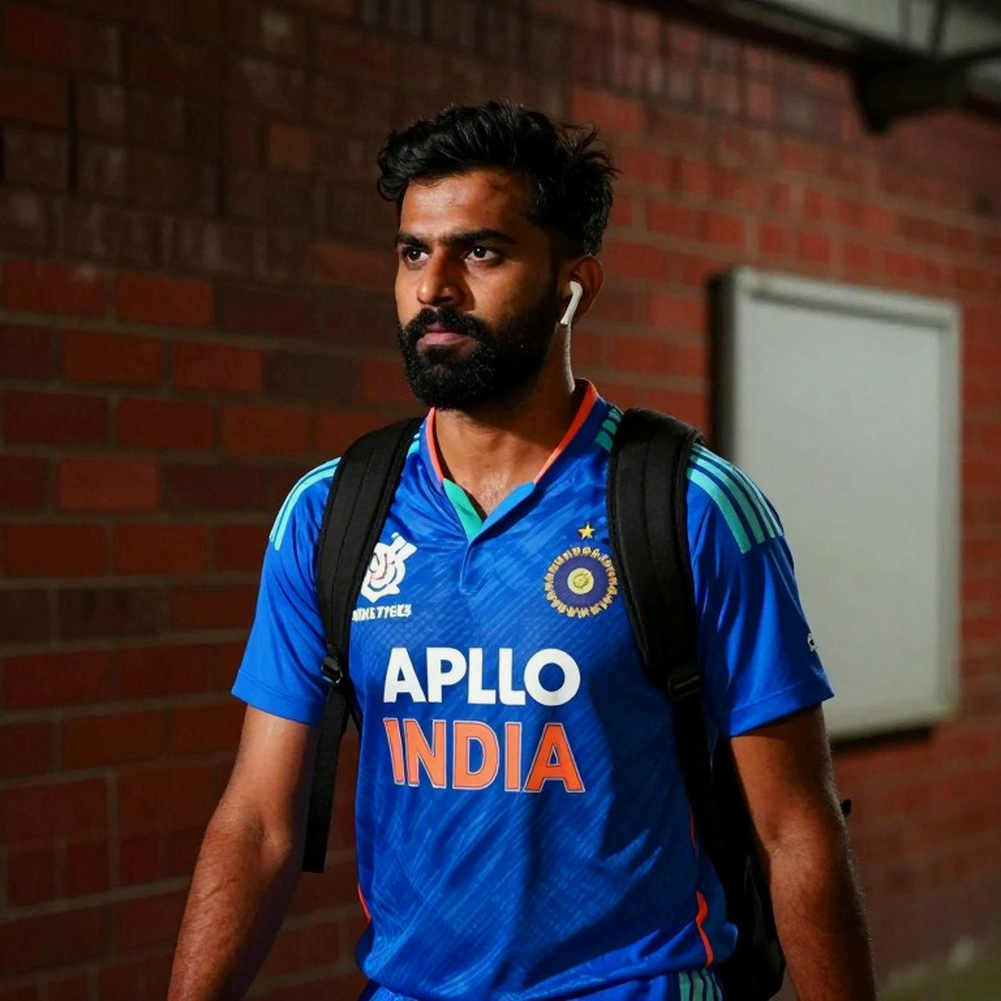
I have one image from this night, and it is not the 118. It is the unnamed correspondent who watched 13.2 overs of bowling and did not write down a single bowler's name. Cricket was making history that evening and the reporting was folding itself into one paragraph. The records will be verified one day. The question is whether, by then, we will still remember that New Zealand made 198 that night.